Draft — pending fishing-accuracy review. Not listed on the site and not indexed by search engines.
Techniques
Fishing with worms in Cyprus
Fishing.com.cy Editorial · 4 min read · Published · Updated
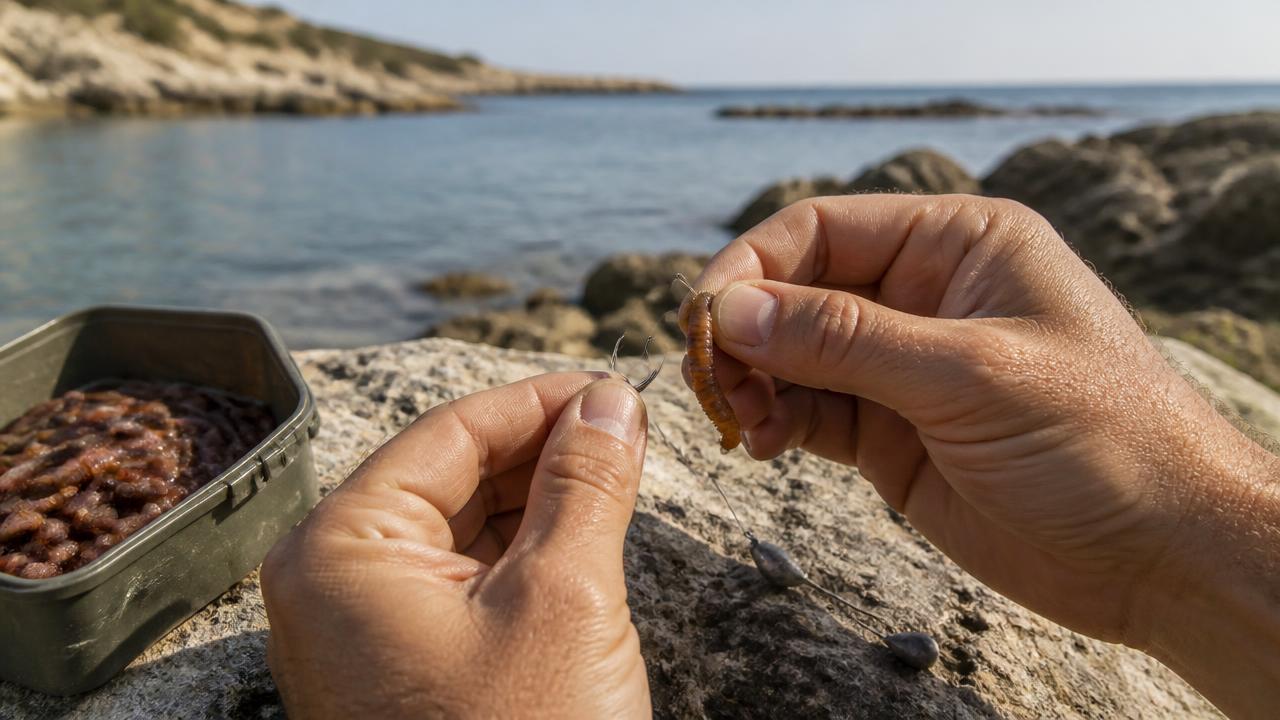
Worms are among the most reliable natural baits for shore fishing in Cyprus. They give off scent quickly, wriggle enticingly on the hook, and appeal to a wide range of species from small bream to sea bass. Fishing them well is less about the bait itself and more about presentation, freshness and matching the rig to the conditions — this guide covers all three.
Why worms work
A worm's movement and scent trail make it one of the most consistent baits for bottom-feeding species. Unlike a static piece of fish strip, a lively worm keeps working even when left in one place for a while, which suits the patient, wait-for-a-bite style of most Cyprus surfcasting.
Worms are especially effective on calmer, clearer water where fish get a close look at the bait before committing — exactly the conditions found on many Cyprus beaches outside of rough weather.
Presentation on the hook
How a worm is threaded matters more than how many you use. A neatly presented single worm, hooked through the head and allowed to trail naturally, consistently out-fishes a hook buried under a bunch of worms that swings unnaturally on the cast.
- Thread the hook point through the worm's head and slide it a short way up the shank before nicking the point back out
- Leave a trailing tail of a few centimetres to give movement and scent without excess bulk
- For larger baits, thread two smaller worms rather than one long one folded over — it casts more cleanly and stays on the hook better
- Re-bait as soon as a worm looks washed out or has been picked clean — a fresh scent trail draws far more interest
Hook sizing
Long-shank hooks make threading easier and give a neater profile than short-shank patterns. Size should match the worm and the target, not be maximised for strength.
- Size 4–2 long-shank: small worm baits for bream and mixed light fishing
- Size 1–1/0 long-shank: standard all-round worm bait size for most Cyprus beach species
- Size 1/0–2/0: bigger worm bunches or worm-and-fish-strip combinations aimed at sea bass
Keeping worm bait in good condition
Worms deteriorate quickly in Cyprus heat, and a soft, pale worm catches far less than a firm, lively one. Keep bait out of direct sun at all times, ideally in a cool box or shaded bag with damp (not wet) newspaper or seaweed packing.
Buy or dig bait as close to your session as practical rather than holding it for days. If you do need to keep worms overnight, a cool, dark spot such as a fridge (kept separate from food) will extend their condition noticeably compared with leaving them in a warm car or tackle bag.
Rigs that suit worm baits
Worms work well on most standard surfcasting rigs, but a couple of adjustments help get the best from them.
- Two-hook paternoster with short snoods: keeps worm baits presented cleanly off the bottom, good for bream and mixed fishing
- Running leger with a single hook: lets a fish pick up a worm bait and move off without immediately feeling resistance — useful for more cautious species
- Smaller beads and swivels: worm fishing tends to use lighter overall tackle, so scale terminal tackle down to match rather than using surfcasting-weight components throughout
Species that respond well to worm baits
Worms are genuinely all-round bait on Cyprus shores rather than a specialist choice, which is part of why they remain a staple in most anglers' bait bags.
- Sea bream and similar small bottom feeders — a classic worm-bait target
- Small to medium sea bass, especially in calmer conditions or lower light
- Mixed light-tackle sessions where you want steady bites over a big single-species target
When to switch away from worms
Worms are less effective when you specifically want to target larger predatory species or when the water is heavily coloured after wind or rain, since scent baits with more oil content — such as fish strip or squid — often carry further and hold up better in those conditions. See our guide to matching bait to species and ground for more detail on choosing between bait types.
Frequently asked questions
- What is the best hook size for worm bait in Cyprus?
- A size 1 to 1/0 long-shank hook suits most Cyprus shore fishing with worm bait, giving a neat presentation for bream and general mixed species. Scale down for smaller fish or up for larger sea bass baits.
- How do I keep worms fresh in hot weather?
- Keep worms out of direct sun in a cool box or shaded bag with damp newspaper, buy or dig bait close to your session, and store overnight in a cool, dark spot such as a separate fridge if needed.
- How many worms should I put on a hook?
- Usually one, neatly threaded with a short trailing tail. A single well-presented worm generally out-fishes a bulky bunch, which tends to swing unnaturally on the cast and mask the hook point.
- Do worms work at night as well as during the day?
- Yes — worm baits fish well after dark, when many species move closer inshore to feed. Keep bait fresh and check it regularly, since crabs can pick a hook clean without you noticing in low light.
Recommended gear for this guide
Live picks from the Hobby Mania Cyprus catalogue that suit the setups described above.
Share this guide