Draft — pending fishing-accuracy review. Not listed on the site and not indexed by search engines.
Fishing Spots
Best Shore Jigging Spots in Cyprus
Fishing.com.cy Editorial · 5 min read · Published · Updated
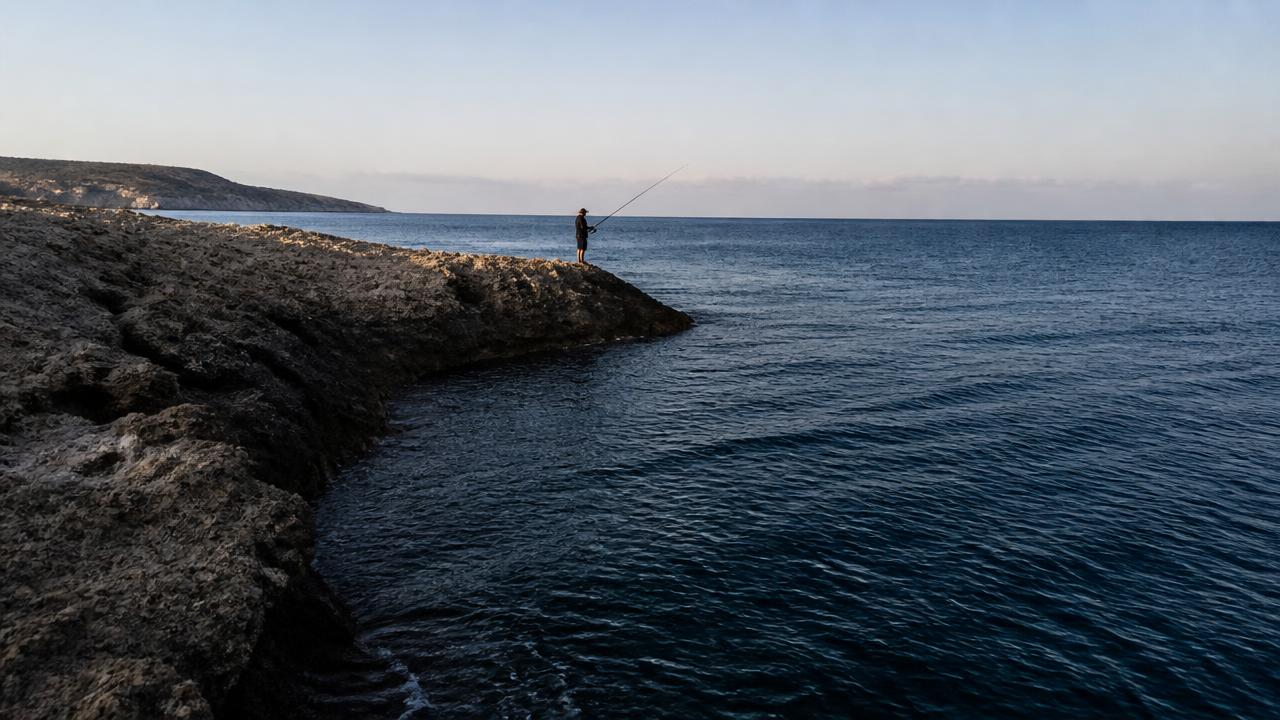
Finding a shore jigging spot in Cyprus is really about finding one thing: deep water within casting range of somewhere you can safely stand. Rather than naming specific dangerous or fragile micro-marks, this guide explains the ground types that consistently hold fish, the general areas around the island where that ground occurs, and — because these are inherently more exposed marks — the safety checks that come before any of it.
What makes a good shore jigging mark
The single most important feature is depth close to shore. A beach that shelves gradually for two hundred metres before reaching any real depth is not a shore jigging mark, however good it might be for surfcasting. What you are looking for is ground where the seabed drops away quickly — often within one or two jig casts — putting genuine depth, current and passing fish within reach.
Beyond depth, current and water movement matter. A mark with some tidal or wind-driven flow tends to concentrate baitfish and, in turn, predators, more than a stagnant corner with no movement at all.
Deep-water headlands
Rocky headlands that push out into open water are the classic shore jigging ground in Cyprus. The tip of a headland, where two sides of current can meet, is often the most productive single spot, but it is also usually the most exposed to swell from multiple directions, so it demands the most caution.
Fish the sides of a headland as well as the tip — moving even a short distance around the point can put you into a different depth and current, and away from the most exposed ground if conditions deteriorate.
Harbour breakwaters and outer walls
Breakwaters and harbour walls often give the most accessible deep water on the island, with a solid, level platform to fish from rather than broken rock. The outer, seaward face is usually where the depth is; the inner harbour side is typically shallower and less productive for jigging.
These marks are generally safer than natural headlands because the platform is more consistent, but the outer face can still see significant wave action in onshore winds and swell, and wet, algae-covered concrete is just as slippery as wet rock.
Rock platforms with a sharp drop
Between headlands and harbours sit the many rock platforms found along stretches of the Cyprus coastline — flatter ledges at or just above sea level where the rock face drops steeply into deep water rather than shelving gradually. These can be excellent jigging marks, but they are also the ground most associated with people being caught out by an unexpected wave, because the platform itself often sits close to the water.
On any rock platform, spend time before you fish assessing how high above the water you actually are, how far back a larger wave could reach, and where you would retreat to if the sea state picked up while you were fishing.
General areas around Cyprus
Deep-water ground of the types described above occurs at various points along the Limassol, Larnaca, Paphos and Famagusta coastlines, generally wherever the coast turns rocky rather than sandy — around headlands, at the ends of some beaches, and at harbour and marina breakwaters. Our location-specific guides to Famagusta shore jigging and Cyclops Cave go into more detail on those particular areas.
Rather than naming specific dangerous or sensitive spots here, the practical approach is to study a coastal map or satellite image for stretches where rock meets deep blue water close to shore, then visit at a safe, calm time to assess access and conditions before ever making a cast in anger.
Safety: the non-negotiable part of choosing a mark
Every mark described above shares the same risk profile: deep water, often close to where you are standing, on ground that can be slippery and exposed to swell. That combination is what makes these marks worth fishing and what makes them genuinely dangerous if treated casually.
Before fishing any new mark, visit it in good conditions first if possible, watch the sea for several minutes to understand wave sets rather than judging by a single calm moment, and never assume a spot is safe just because someone else was fishing it that day.
- Never fish alone at an exposed rock or headland mark
- Wear footwear with genuine grip — wet limestone and algae-covered concrete are extremely slippery
- Watch the sea for several minutes before approaching the edge; swell comes in unpredictable sets
- Know your escape route inland before you start fishing
- Avoid low platforms altogether in any onshore swell or after recent stormy weather
- Tell someone your plan and expected return time
Access and courtesy
Some coastal ground in Cyprus is on or near private land, protected coastline or areas with specific access rules, and these can change. If access to a stretch of coast is unclear, or a path looks unofficial or unsafe, treat that as a reason to look elsewhere rather than pushing through. Leave gates as you find them, take your litter home, and be mindful of other users of the coastline.
Frequently asked questions
- How do I find shore jigging marks in Cyprus without GPS coordinates from someone else?
- Look for stretches of coastline where rocky ground meets clearly deep, dark-coloured water close to shore — headlands, harbour breakwaters and rock platforms are the ground types to search for on a map, then verify access and safety in person.
- Are harbour walls or natural headlands better for shore jigging?
- Harbour walls often give a more consistent, level platform and can be a safer starting point, while natural headlands can offer better current and fish-holding features but tend to be more exposed. Both need a proper safety check before fishing.
- Is it safe to shore jig alone in Cyprus?
- It is not recommended. Exposed rock and headland marks carry real risks from swell and slippery ground, and fishing alone removes any chance of quick help if something goes wrong. Always fish with a partner or at least tell someone your plans.
- What time of day is best for shore jigging marks in Cyprus?
- Early morning and dusk are generally the most productive windows, particularly in summer, though the sea state on the day matters more than the clock for both safety and results.
Share this guide