Draft — pending fishing-accuracy review. Not listed on the site and not indexed by search engines.
Techniques
Shore Jigging in Cyprus: The Complete Guide
Fishing.com.cy Editorial · 7 min read · Published · Updated
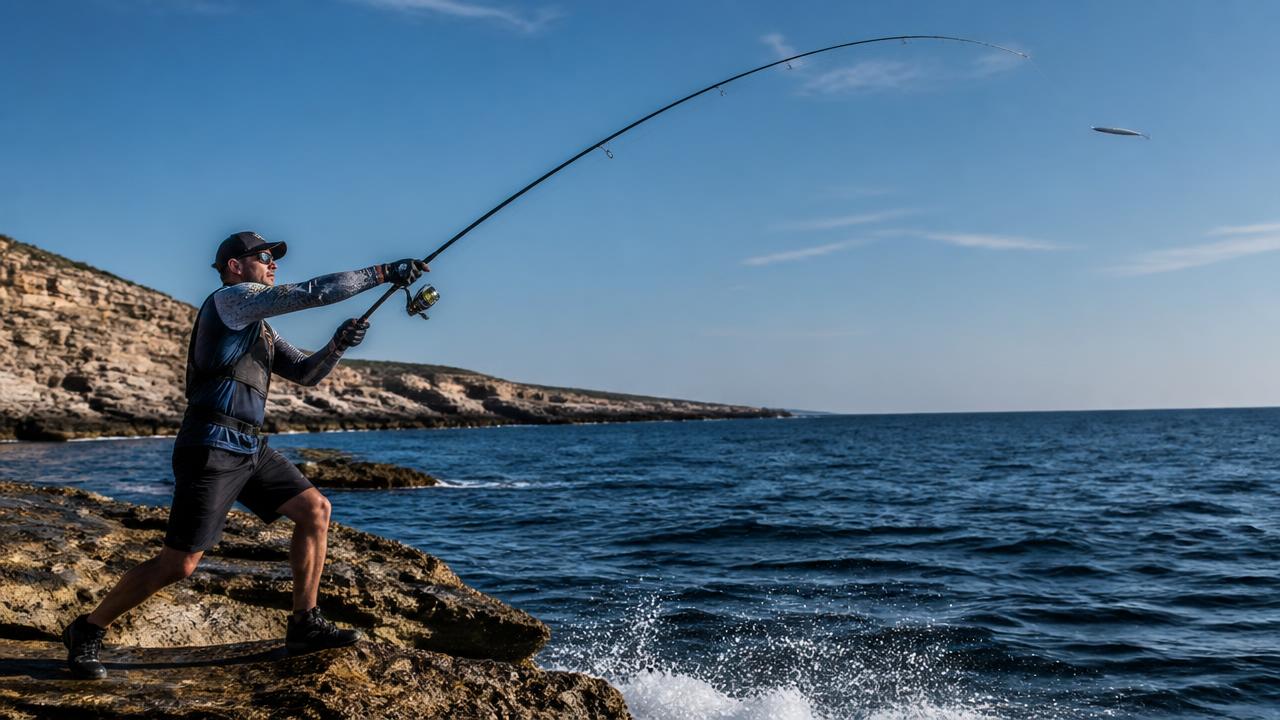
Shore jigging is the art of casting a metal jig from the rocks into deep water and working it back through the water column to trigger predatory fish that would otherwise stay well out of range of normal lure or bait tactics. In Cyprus, where the seabed drops away quickly off many headlands, breakwaters and rocky points, shore jigging opens up species and depths that shore anglers elsewhere can only reach from a boat. This guide pulls together everything covered across our shore jigging series — ground and marks, tackle, technique, target species and, above all, safety — so you can read it as a standalone introduction or use it as the hub for the more detailed articles linked throughout.
What shore jigging actually is
At its simplest, shore jigging means casting a weighted metal lure — a jig — out over deep water, letting it sink to a chosen depth or the seabed, then retrieving it in a rhythm designed to make it flutter, dart or flash like an injured baitfish. Predators that patrol open water and steep drop-offs, rather than sitting tight to structure, are the usual targets.
It differs from LRF and HRF in that the emphasis is on reaching and covering deep water efficiently, often 15–40 metres or more within casting range of a good mark, rather than picking apart close-in structure with finesse presentations.
Where shore jigging works in Cyprus
The technique depends entirely on finding places where deep water comes close to the shoreline. Cyprus has a number of these around its coast — rocky headlands, harbour walls with steep outer faces, and rock platforms where the seabed shelves away quickly rather than shelving gently as it does off most sandy beaches.
Our dedicated spots guide covers the general ground types and areas in detail, and our location-specific guides look at Famagusta and Cyclops Cave, both known among Cyprus anglers for genuine depth within casting range.
- Rocky headlands with deep water directly off the point
- Harbour breakwaters and outer walls
- Rock platforms with a sharp drop rather than a shallow shelf
- Areas with clean current and good water movement
Tackle for shore jigging in Cyprus
Shore jigging tackle needs to cope with long casts, heavy lures and fish that will use depth and structure against you. A typical shore jigging rod runs from around 2.7 to 3.3 metres, rated to cast jigs from roughly 40g up to 100g or more depending on the mark, with a resilient blank that can absorb sudden lunges without a straight, unforgiving action.
Reels are large, saltwater-rated spinning reels — typically 6000 to 10000 size — with a strong drag system and enough line capacity to hold several hundred metres of braid. Mainline is almost always PE braid, chosen for its thin diameter and lack of stretch, which helps both casting distance and feeling contact with the jig at depth. A separate article compares PE2, PE3 and PE4 for different marks and target species. Leader is generally a length of fluorocarbon, chosen for abrasion resistance against rock and coral, tied to the mainline with a strong leader knot.
Jig choice depends on depth, current and the retrieve style you intend to fish — our guide to choosing jig weight and our slow-versus-fast jigging comparison go into this properly, as does our roundup of the metal jigs that suit Cyprus ground.
Technique: working the jig
Two broad approaches cover most shore jigging in Cyprus. Fast jigging uses rapid, high, sweeping rod strokes combined with fast reeling to make the jig dart erratically through the water column — effective when fish are actively feeding and you want to cover a lot of water quickly. Slow jigging, or slow-pitch style adapted for the shore, lets the jig flutter and fall on a controlled semi-slack line, often taking more fish when the water is calmer or fish are less committed.
Whichever style you fish, letting the jig reach the depth you actually want to fish before starting the retrieve matters more than most anglers assume. Counting the jig down on a semi-taut line and varying that count until you find where the takes come is one of the most useful habits in shore jigging.
Target species
Amberjack are the headline species for shore jigging in Cyprus, and our dedicated amberjack guide covers realistic expectations, tackle and technique for that fish specifically. Leerfish, bonito, small tuna species and the occasional larger predator can also turn up, though pelagics like tuna are genuinely rare and highly conditional from the shore — see our tuna-specific article for an honest account of when and how that can happen, and our mahi mahi article for a similarly realistic look at that species.
It is worth setting expectations early: most sessions will not produce a big pelagic. Consistent shore jigging success in Cyprus comes from putting in time on the right ground, in the right conditions, more than from any single piece of tackle.
Seasons and conditions
Shore jigging in Cyprus is best through the warmer months, roughly from late spring through autumn, when baitfish activity picks up and predators move within casting range of the rocks. Early morning and dusk are generally the most productive windows, particularly in high summer when daytime heat and bright light push fish deeper or further out.
Sea state matters as much as season. A light to moderate breeze that puts some ripple on the water and a bit of colour into it is usually preferable to a flat calm, but any significant swell changes both the fishing and the safety picture at rock marks, which brings us to the most important section of this guide.
Safety at shore jigging marks
The marks that make shore jigging possible — deep water close to the rocks — are, by definition, more exposed and more dangerous than a gently shelving beach. Every genuine shore jigging location in Cyprus deserves a proper safety assessment before you fish it, not after something goes wrong.
Never fish an exposed rock mark alone, always tell someone where you are and when you expect to be back, wear footwear with real grip rather than trainers or sandals, and watch the sea for several minutes before committing to a low platform, since swell arrives in sets and a calm-looking spell can be followed by a much larger wave. Identify an escape route inland before you start fishing, not while a wave is already breaking over the rocks.
- Never fish deep-water rock marks alone
- Check the swell and tide forecast before you leave, and again on arrival
- Wear grippy, ideally studded, footwear — limestone is treacherous when wet or covered in algae
- Identify your escape route inland before fishing, not during an emergency
- Watch the sea for several minutes to understand the wave sets before approaching the edge
- Carry a means of calling for help and keep it dry and accessible
Rules, licences and access
As with any form of sea angling in Cyprus, requirements around licences, closed seasons and protected areas can change, and some ground may be affected by local restrictions. Always verify current rules with the Department of Fisheries and Marine Research (DFMR) before you fish, rather than relying on what worked last season.
Building out your shore jigging knowledge
This pillar guide is deliberately broad. For the detail that actually changes results — which ground to look for, how to fish specific areas, which jig weight suits which depth, and how to set drag for a fish that wants to reef you — use the supporting guides linked below. Together they form the full shore jigging library for Cyprus anglers.
Frequently asked questions
- Is shore jigging good for beginners?
- It is more physically demanding than LRF or bait fishing and often involves exposed ground, so it suits anglers with some casting and rock-mark experience already. Start on safer, more accessible marks and build up tackle and technique before tackling the most exposed spots.
- What is the minimum tackle needed to start shore jigging in Cyprus?
- A rod rated for roughly 40–80g jigs, a large saltwater spinning reel with a reliable drag, PE3-ish braid, a fluorocarbon leader and a small selection of metal jigs in different weights and colours will cover most Cyprus marks to begin with.
- What is the best time of year for shore jigging in Cyprus?
- Late spring through autumn generally produces the most consistent activity, with early morning and dusk the best windows during the hottest summer months. Conditions on the day still matter more than the calendar.
- Do I need a licence to shore jig in Cyprus?
- Requirements can change, so always check current rules with the Department of Fisheries and Marine Research before fishing, particularly if you are new to sea angling in Cyprus.
- Can you catch tuna or amberjack from the shore in Cyprus?
- Amberjack are a realistic, if not guaranteed, target from the right deep-water marks. Tuna from the shore are genuinely rare and highly weather- and season-dependent — see our dedicated guides for honest detail on both.
Recommended gear for this guide
Live picks from the Hobby Mania Cyprus catalogue that suit the setups described above.
Share this guide
Keep going
- Best shore jigging spots in Cyprus
- Shore jigging in Famagusta
- Shore jigging at Cyclops Cave
- How to catch amberjack from shore
- Shore jigging for tuna in Cyprus
- Shore fishing for mahi mahi
- Best metal jigs for shore jigging
- Best shore jigging rods and reels
- PE2 vs PE3 vs PE4 braid
- How to choose jig weight
- Slow vs fast shore jigging
- Shore fishing overview