Draft — pending fishing-accuracy review. Not listed on the site and not indexed by search engines.
Techniques
Choosing the Right Jig Weight in Cyprus
Fishing.com.cy Editorial · 4 min read · Published · Updated
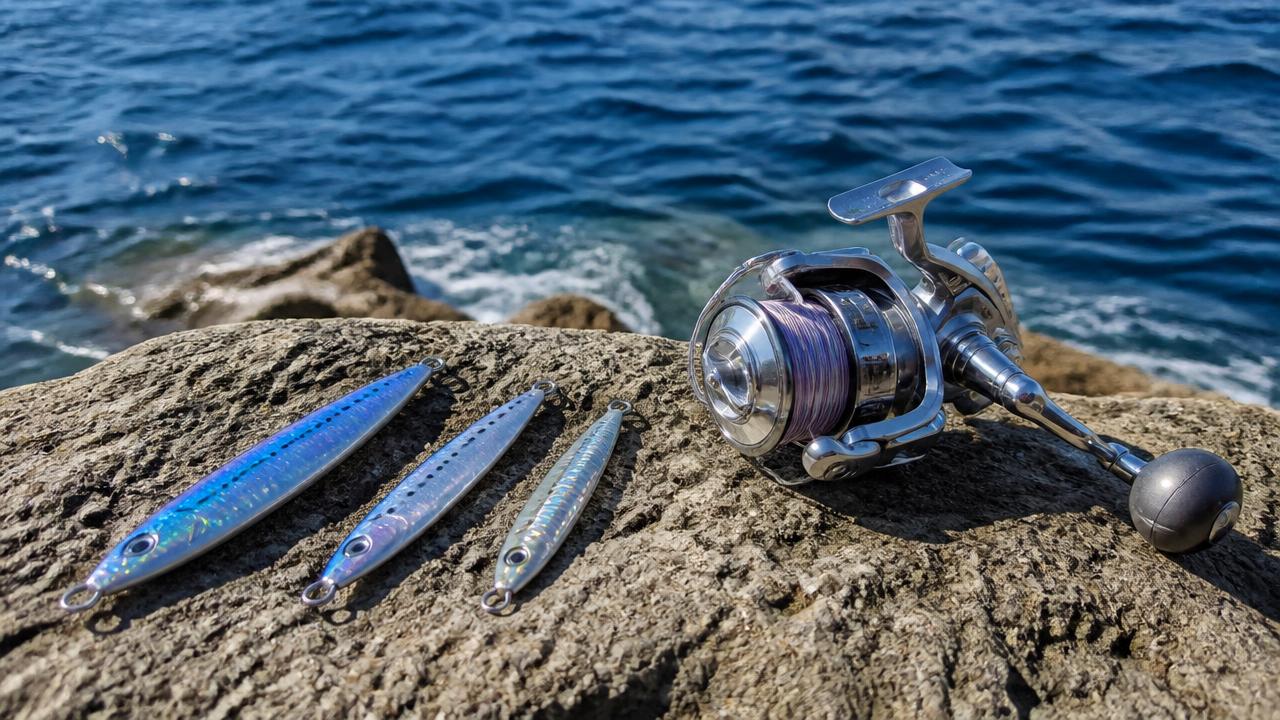
New shore jiggers often ask which single jig weight to buy, but the honest answer is that the right weight changes with depth, current, wind and how far you need to cast on a given day. None of this requires complicated maths — a few plain rules of thumb are enough to get you close, and feel does the rest once you are on the rocks.
Depth: the starting point
The deeper the water at your mark, the more weight you generally need, simply to reach and maintain contact with the bottom or the depth band you want to fish within a reasonable time. In shallow water of a few metres, a light jig will reach bottom almost immediately; in 15–20m or more, a light jig can drift a long way sideways before it ever gets down, especially with any current running.
As a rough starting rule, many Cyprus shore jiggers think in terms of roughly 1g of jig weight for every metre of depth as a light-conditions baseline, then add weight on top for current and wind. So a calm 15m mark might start around a 30–40g jig, while a similar depth with strong current might need 60g or more to hold contact properly.
Current: the biggest single factor
Current pushes a falling or retrieved jig sideways and up, which is why the same depth can call for very different weights depending on how much water is moving. Strong current effectively steals weight from your jig by lifting and dragging it, so you need more raw weight to compensate and keep the jig behaving as intended, whether that is holding near bottom or working a specific depth band on the retrieve.
A simple way to judge current strength before committing to a jig weight is to watch how quickly your line angle changes after the cast, or observe surface drift near the rocks — if the water is clearly moving fast, step up a weight class from what depth alone would suggest.
Wind: casting and control
Wind affects jig choice in two separate ways: it changes how far you can cast a given weight, and it changes how much control you have over the jig once it is in the air and on the retrieve. A stiff onshore wind can make a light jig almost impossible to cast any useful distance, while the same wind barely affects a heavier jig's flight.
On very windy Cyprus days, many anglers step up in weight specifically to punch through the wind and maintain casting accuracy, even if the depth and current alone would suggest something lighter — a well-placed heavier jig beats a poorly controlled light one every time.
Casting distance: matching weight to your rod
Every rod has a casting weight rating for good reason: too light a jig will not load the rod properly and will cast poorly and inaccurately, while too heavy a jig risks damaging the rod and also casts worse than a jig matched properly within the rating. Staying within your rod's stated range, and generally favouring the middle to upper end of that range for maximum distance, is the simplest way to get casting distance right.
If a particular mark genuinely needs more distance than your current rod and jig combination can deliver, the honest fix is a heavier-rated rod and reel, not forcing an oversized jig onto tackle not built for it.
Sink rate maths in plain terms
You do not need to calculate exact sink rates, but understanding the idea helps. A jig's sink rate is roughly how many metres per second it falls through calm water, and heavier, slimmer jigs sink faster than lighter, wider ones. If you know roughly how fast your jig sinks, you can count it down after casting — for example, counting to ten before starting your retrieve gives a rough, repeatable way to fish a consistent depth band, which is far more useful in practice than an exact number.
The simplest way to learn your own jigs' sink rates is to count them down next to a known-depth structure such as a harbour wall, note roughly how long they take to hit bottom, then use that as a personal reference for similar jigs on unfamiliar marks.
Putting it together on the day
In practice, most anglers start with a middle-weight jig within their rod's rating, judge from the first few casts whether they are reaching and holding the depth they want, and adjust up or down from there based on how the current and wind are behaving that day. Carrying two or three weights covering your rod's full range, rather than a single favourite, is what actually lets you adapt properly at the mark.
Frequently asked questions
- How do I know what jig weight to start with?
- A rough starting point is about 1g per metre of depth in calm conditions, then add weight for current and wind. Stay within your rod's rated casting weight range and adjust from your first few casts.
- Why does current matter more than depth for jig weight?
- Current pushes a jig sideways and up as it falls or retrieves, effectively reducing its usable weight. Strong current often needs a heavier jig than depth alone would suggest, to maintain proper bottom or depth-band contact.
- Should I use a heavier jig on windy days even in shallow water?
- Often yes. Wind reduces casting distance and control more for light jigs than heavy ones, so stepping up in weight can improve accuracy and distance even when depth alone would suggest something lighter.
- How can I estimate a jig's sink rate without special equipment?
- Count the jig down next to a known-depth structure like a harbour wall, timing roughly how long it takes to hit bottom. Use that count as a personal reference for fishing similar jigs at a consistent depth elsewhere.
Recommended gear for this guide
Live picks from the Hobby Mania Cyprus catalogue that suit the setups described above.
Share this guide