Draft — pending fishing-accuracy review. Not listed on the site and not indexed by search engines.
Gear & Tackle
Rods and Reels for Cyprus Shore Jigging
Fishing.com.cy Editorial · 4 min read · Published · Updated
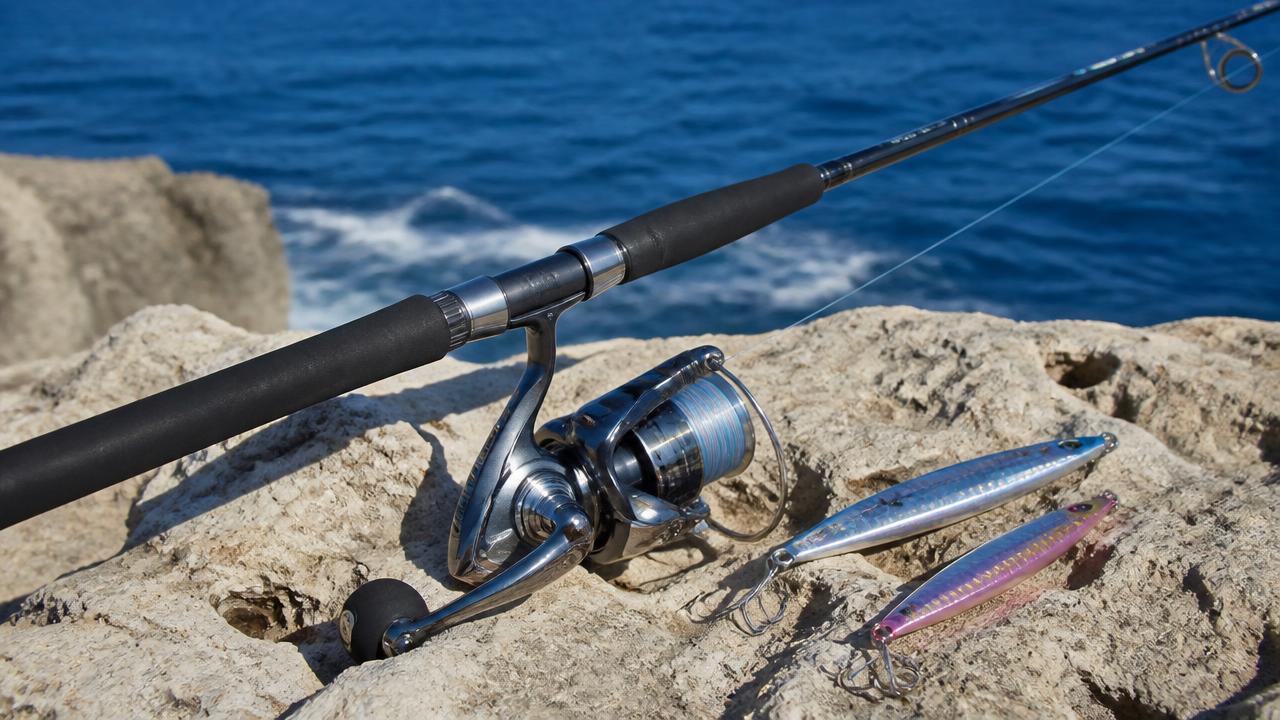
A shore jigging rod and reel combo has to do several jobs at once: cast a heavy metal jig a long way, work that jig with repeated rod-and-reel action, and then survive a sustained fight against a powerful fish like amberjack over rough ground. Getting the rod length, power rating and reel size right for the marks you actually fish matters more than any individual brand or model, so this guide focuses on the trade-offs.
Rod length: casting distance vs control
Longer rods, typically in the 9–10ft (2.7–3m) range, generate more casting distance and help keep line above rocks and swell close to the angler, which matters on the exposed, wave-affected marks common around Cyprus. The trade-off is weight and fatigue over a long session of repeated casting and jigging.
Shorter rods around 8–8.6ft sacrifice some casting distance but give more direct control during the fight and are easier to work all day, which suits anglers prioritising technique and stamina over maximum range.
Power and casting weight rating
Rod power ratings for shore jigging are usually expressed as a casting weight range, and matching this to the jigs you intend to throw is essential — a rod rated for 20–60g will struggle and risk damage with 100g jigs, while a rod rated for 60–120g will feel dead and lifeless with light 30g jigs.
For most general Cyprus rock-mark work, a rod rated around 40–100g covers the bulk of realistic jig weights. Anglers fishing deeper marks or targeting the biggest amberjack and tuna often step up to a heavier-rated rod capable of 80–150g to handle bigger jigs and apply more lifting power during the fight.
- Light: 20–60g rating, shallow marks, smaller species, lighter overall setup
- Medium: 40–100g rating, the general-purpose choice for most Cyprus marks
- Heavy: 80–150g+ rating, deep marks, big amberjack, tuna potential, maximum lifting power
Reel size and why it matters here
Shore jigging reels in Cyprus typically run from around size 5000 up to 14000 or larger. Reel size affects three things at once: line capacity, retrieve speed per handle turn, and the raw structural strength needed to survive sustained pressure from a powerful fish pulling hard for structure.
A 5000–8000 size reel suits lighter rods and smaller jigs, giving a faster, more manageable setup for general jigging and smaller species. Moving up to 10000–14000 size reels brings the line capacity and drag strength needed for the heaviest jigs, the biggest amberjack, and any realistic tuna or pelagic encounter, at the cost of extra weight to carry and cast all session.
Drag: settings and quality
Drag quality matters more in shore jigging than almost any other Cyprus shore technique, because fights against amberjack or tuna over rocky, structure-heavy ground are often decided in the first few seconds after the hookup. A smooth, reliable drag that will not surge or stick under heavy, sustained pressure is worth prioritising over almost any other reel feature.
As a starting point, many anglers set drag at roughly a third of their leader's breaking strain, then adjust up gradually if a fish is winning the initial battle for structure, always balancing stopping power against the risk of a straightened hook or snapped leader.
Gear ratio
High gear ratio reels (roughly 5.8:1 to 6.2:1 or higher) retrieve line quickly, which suits fast jigging techniques and helps keep pace with a jig on the drop through slack line. Lower gear ratio reels retrieve more slowly but typically deliver more cranking power per turn, which can help when grinding a big fish away from structure.
Most dedicated shore jigging reels favour the faster end of this range because keeping tension and working the jig actively is usually more important than raw low-speed power, but this is a genuine trade-off worth thinking through for your own style rather than a fixed rule.
Matching the whole setup to your jig weight
The rod, reel, line and jig all need to work together rather than being chosen in isolation. A heavy rod paired with an undersized reel will struggle to apply drag pressure; a huge reel on a light rod adds dead weight without benefit. Start from the jig weights you actually need for your local marks (see our guide on choosing jig weight) and build the rod and reel choice outward from there.
Frequently asked questions
- What rod length is best for shore jigging in Cyprus?
- 9–10ft rods give more casting distance and keep line clear of rocks and swell, while 8–8.6ft rods offer more direct control and are less tiring over a long session. Both are used successfully in Cyprus.
- What reel size do I need for Cyprus shore jigging?
- 5000–8000 size suits lighter rods and smaller jigs; 10000–14000 size suits heavier jigs, big amberjack and any pelagic potential where line capacity and drag strength matter most.
- What gear ratio is best for shore jigging reels?
- Faster ratios (around 5.8:1–6.2:1 or higher) suit most active jigging techniques by keeping pace with the jig and maintaining tension, though lower ratios can offer more cranking power for grinding fish away from structure.
- How should I set my drag for shore jigging?
- A common starting point is roughly a third of your leader's breaking strain, adjusted upward if a fish is winning the initial fight for structure, while balancing against the risk of a snapped leader or straightened hook.
Recommended gear for this guide
Live picks from the Hobby Mania Cyprus catalogue that suit the setups described above.
Share this guide