Draft — pending fishing-accuracy review. Not listed on the site and not indexed by search engines.
Gear & Tackle
Choosing Metal Jigs for Cyprus Shore Jigging
Fishing.com.cy Editorial · 4 min read · Published · Updated
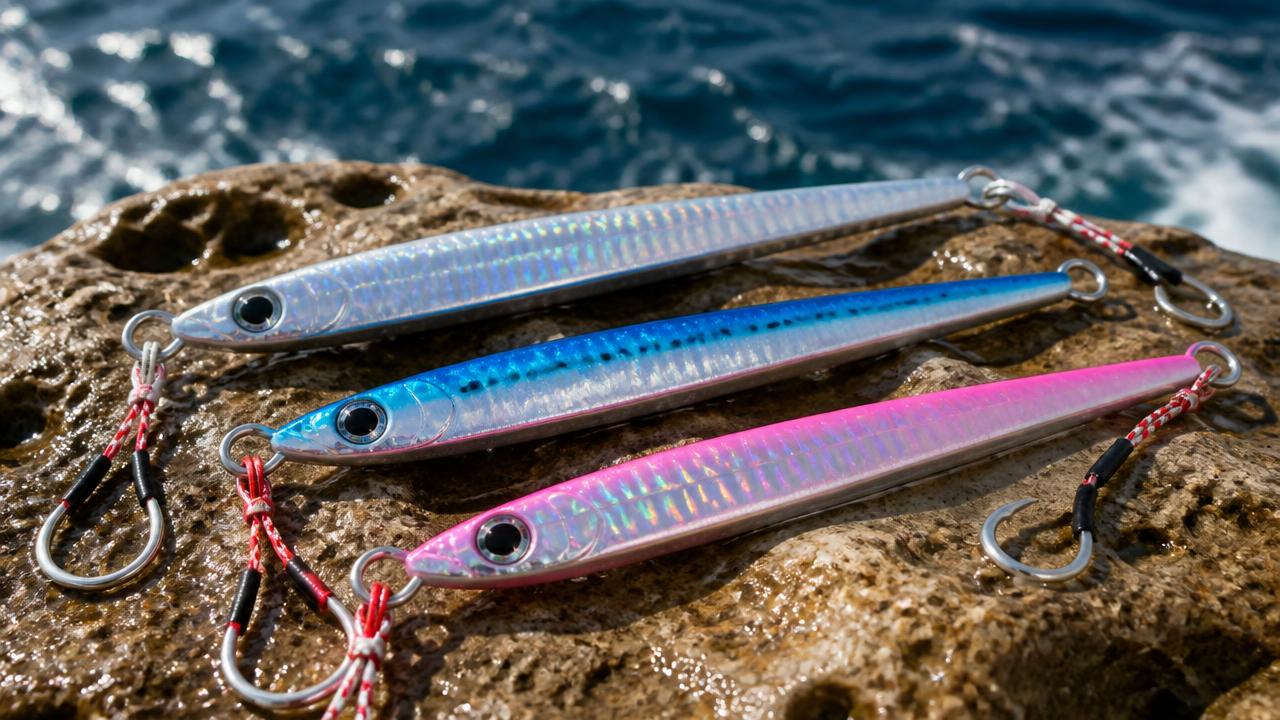
Metal jigs are the working tool of Cyprus shore jigging, and the choice you carry in your bag will make or break a session more than almost any other piece of gear. There is no single correct jig — shape, weight, sink rate and colour all need to be matched to the mark, the depth, the current and what you are trying to trigger. This guide breaks down the trade-offs so you can build a sensible jig selection rather than guessing.
Jig shapes and what they do
Long, slim jigs cut through water fast and hold a straight, direct fall, which makes them the go-to choice when you need to get down quickly in deep water or strong current. They also cast a long way for their weight, which matters when distance is the difference between reaching fish and not.
Wider, flatter or asymmetric jigs fall with more wobble and flutter, kicking out to the side as they sink. That extra movement can be the trigger on a slower day, but it comes at the cost of casting distance and sink speed, so it suits calmer conditions or shallower marks where you do not need to fight current to get down.
Weight selection
Cyprus shore jigging generally covers a weight range from around 20g on light spinning gear up to 100g or more on the biggest dedicated setups, with 40–80g covering the bulk of typical rock-mark sessions. Heavier jigs cast further and hold bottom contact better in wind and current; lighter jigs give a more natural fall and suit calmer, shallower water or lighter tackle.
The right weight is a function of depth, current, wind and rod rating together, not any one of those alone — our companion article on choosing jig weight works through that in more detail.
- 20–40g: shallow marks, light rods, calm conditions
- 40–60g: the general-purpose range for most Cyprus rock marks
- 60–100g+: deep water, strong current, windy days, or reaching distant fish
Sink rate and why it matters
Sink rate is a function of both weight and shape, and it directly affects how you fish a jig. A fast-sinking slim jig lets you count it down accurately to a known depth and work a specific layer of the water column repeatedly. A slower, fluttering jig covers more of the fall visually but is harder to fish precisely at depth in any current.
In practice, most Cyprus anglers carry both types: fast sinkers for getting down quickly over deep, current-affected marks, and slower fluttering jigs for working mid-water on calmer days when a more natural presentation pays off.
Colour choices
Colour matters less than action and depth in clear Cyprus water, but it is not irrelevant. Bright, high-contrast finishes such as silver, chartreuse or pink tend to stand out well in the bright light and clear water typical of Cyprus summers, while more natural blue, green or holographic finishes can work better in calmer, clearer conditions or when fish seem cautious of flashier options.
Rather than obsessing over colour, most experienced shore jiggers keep a small, sensible spread — one or two bright, one or two natural — and change retrieve speed and depth before changing colour repeatedly.
Assist hooks and split rings
Assist hooks matter as much as the jig itself. A short assist rigged at the head of the jig suits a fast, vertical or semi-vertical retrieve and reduces tangles, while a longer assist can improve hook-up rates on slower, fluttering presentations by giving the fish more to find. Strong, sharp, corrosion-resistant hooks rated for saltwater use are worth paying attention to — a jig is only as good as the hook holding the fish once it strikes.
Split rings are the weak link many anglers overlook. A jig that is otherwise well matched to a mark can be let down by an undersized or worn split ring under sustained pressure from a strong fish like amberjack, so check and upgrade these regularly rather than assuming factory-fitted rings are adequate for repeated hard fights.
Building a sensible jig wallet
For a typical Cyprus shore jigging session, a practical starting spread covers two or three weights across your rod's casting range, a mix of slim fast-sinking and wider fluttering shapes, and a small spread of bright and natural colours. Add a couple of spare assist hook rigs and split rings so a lost or damaged jig does not end your session early.
For the wider picture on marks, target species and technique, our complete shore jigging guide is the best place to start or return to.
Frequently asked questions
- What weight metal jig should I use for shore jigging in Cyprus?
- Most Cyprus rock marks are well covered by 40–80g jigs, with lighter 20–40g jigs for shallow, calm marks and 60–100g+ for deep water, strong current or windy days. Match weight to your rod's casting rating too.
- Does jig colour really matter for shore jigging?
- It matters less than depth, action and speed, but a small spread of bright (silver, chartreuse, pink) and natural (blue, green, holographic) colours covers most Cyprus conditions sensibly.
- Should I use fast-sinking or slow-fluttering jigs in Cyprus?
- Fast-sinking slim jigs suit deep water, strong current and accurate depth control. Slower, fluttering jigs suit calmer, shallower conditions where a more natural falling action can trigger cautious fish.
- How important are assist hooks and split rings?
- Very. Strong, sharp saltwater-rated assist hooks and quality split rings are often the difference between landing and losing a big amberjack or tuna. Check and replace worn rings regularly.
Recommended gear for this guide
Live picks from the Hobby Mania Cyprus catalogue that suit the setups described above.
Share this guide