Draft — pending fishing-accuracy review. Not listed on the site and not indexed by search engines.
Techniques
Mahi Mahi From Shore in Cyprus
Fishing.com.cy Editorial · 4 min read · Published · Updated
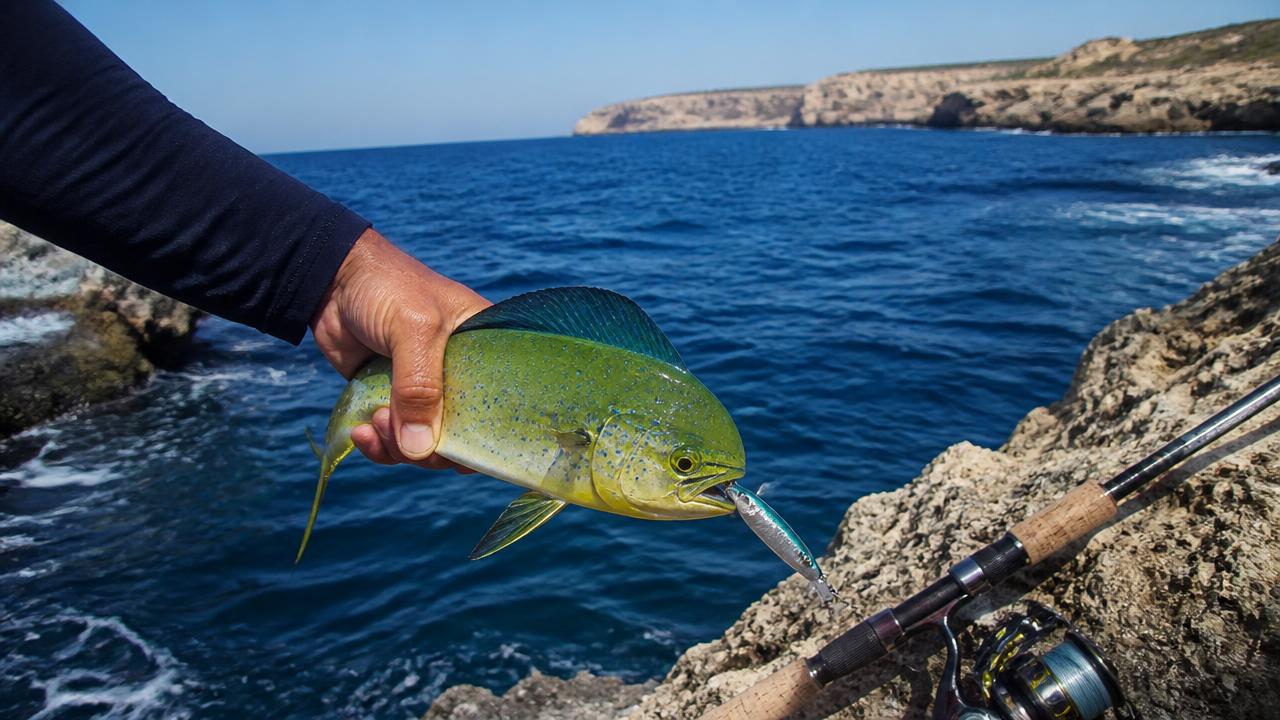
Ask around Cyprus shore jigging circles and you will hear the odd story of a mahi mahi (dorado) coming off the rocks. It genuinely happens. It is also genuinely rare, and treating it as a realistic weekly target will only lead to disappointment. This article sets out, as plainly as we can, when and why shore-caught mahi mahi occur in Cyprus, what conditions have to line up, and what tackle gives you a fighting chance without pretending this is a common catch.
Why mahi mahi are a shore rarity, not a target species
Mahi mahi are open-water pelagics that generally roam well offshore, following warm currents, weed lines and bait balls in blue water. Cyprus does not have the kind of shelving coastline that regularly pushes this kind of water within casting range. The handful of rock marks that drop quickly into deep, clean water are the only places the species is ever realistically encountered from land, and even there it is opportunistic rather than expected.
Anyone selling shore mahi mahi fishing as a dependable technique in Cyprus is overselling it. It belongs in the same conversation as shore-caught tuna: a genuine possibility on the right day, not a plan you should build a session around.
When it can happen
The best window, such as it is, tends to be late summer into early autumn, when warm surface water pushes closer to some of the deeper headlands and juvenile bait fish concentrate near structure. Mahi mahi often follow floating debris, weed patches or bait activity, so a shore encounter is usually the result of that activity briefly drifting within casting range of a deep-water mark rather than the fish specifically visiting the coast.
Calm, settled weather with a light offshore breeze and very clear, blue-tinted water close to the rocks are the conditions most associated with the rare reports we hear about. Surface activity such as diving birds or nervous bait fish skittering on top is the kind of sign worth reacting to immediately if you see it.
Reading the water for a chance encounter
Because this is an opportunistic catch, awareness matters more than any particular retrieve. Anglers who have had shore mahi mahi encounters in Cyprus generally describe fishing a deep rock mark for amberjack or other jigging species and noticing surface commotion, then switching quickly to a lighter, faster presentation to cover the fish before it moves on.
It is worth keeping a stinger-rigged surface popper or a light jig rigged and ready during the warmer months at marks known for deep, clean water, purely so you can react in seconds rather than re-rigging while the moment passes.
- Watch for diving birds, nervous bait, or colour changes on the surface
- Keep one rod pre-rigged with a fast, castable lure for a quick reaction
- Fish deep-water headlands and known amberjack marks rather than shallow beaches
- Treat any sighting as a short window, not a sustained bite
Tackle that suits the encounter
Mahi mahi are fast, acrobatic and surprisingly strong for their size, but they are not built like amberjack for grinding power over structure. A shore jigging setup already carrying PE3–PE4 braid and a rod rated for 40–80g jigs is more than capable, and the same tackle used for amberjack or tuna sessions will cover this chance without any special purchase.
A lighter, faster metal jig or a surface stickbait worked with quick, erratic sweeps tends to suit the species better than a slow bottom presentation, since mahi mahi are sight feeders that respond to speed and flash near the surface rather than fish grubbing along the bottom.
Leader and hook choices
A fluorocarbon leader in the 40–60lb range is a sensible middle ground: strong enough to handle the fish's runs and any incidental contact with structure, without being so heavy it kills the action of a lighter surface lure. Strong, sharp assist hooks or trebles rated for saltwater use matter more than exact leader strength, since mahi mahi have soft mouths that can tear if hooks are dull or undersized.
What to do if you hook one
Mahi mahi jump and thrash on the surface far more than most Cyprus shore species, so keep the rod tip up and steady pressure on rather than horsing the fish in. Because the encounter is usually unplanned, take a moment to check your landing options at the mark before you start the fight — a fish this lively close to sharp rock needs a controlled, patient finish rather than a rush.
Setting realistic expectations
The honest summary is this: shore mahi mahi in Cyprus is a genuine but occasional bonus that rewards anglers who are already fishing deep-water marks properly for amberjack, tuna or other jigging species, staying alert, and carrying tackle capable of a quick change of presentation. It should never be the reason you plan a session, and nobody should promise you one on a given day.
If you want to build a shore jigging session around species that are actually catchable with consistency, our complete guide covers the marks, techniques and target species that make up a realistic Cyprus shore jigging trip.
Frequently asked questions
- Is mahi mahi a common catch from Cyprus shore marks?
- No. It is a genuine but rare, highly seasonal and condition-dependent encounter, usually linked to warm late-summer water and bait activity drifting close to deep-water rock marks. Treat it as a bonus, not a target.
- What time of year gives the best chance of shore mahi mahi in Cyprus?
- Late summer into early autumn, when warm surface water and bait activity are most likely to push near deep-water headlands, offers the best (though still slim) chance.
- What tackle do I need for a chance at shore mahi mahi?
- Standard shore jigging tackle works fine — a rod rated for 40–80g jigs, PE3–PE4 braid, a 40–60lb fluorocarbon leader and strong saltwater hooks. No specialist gear is required.
- Where in Cyprus have shore mahi mahi been reported?
- Deep-water rock marks and headlands with clean, blue water close to the rocks, of the type used for amberjack and shore jigging generally, give the only realistic chance. No specific mark should be relied upon.
Recommended gear for this guide
Live picks from the Hobby Mania Cyprus catalogue that suit the setups described above.
Share this guide