Draft — pending fishing-accuracy review. Not listed on the site and not indexed by search engines.
Techniques
Shore Jigging for Tuna in Cyprus
Fishing.com.cy Editorial · 5 min read · Published · Updated
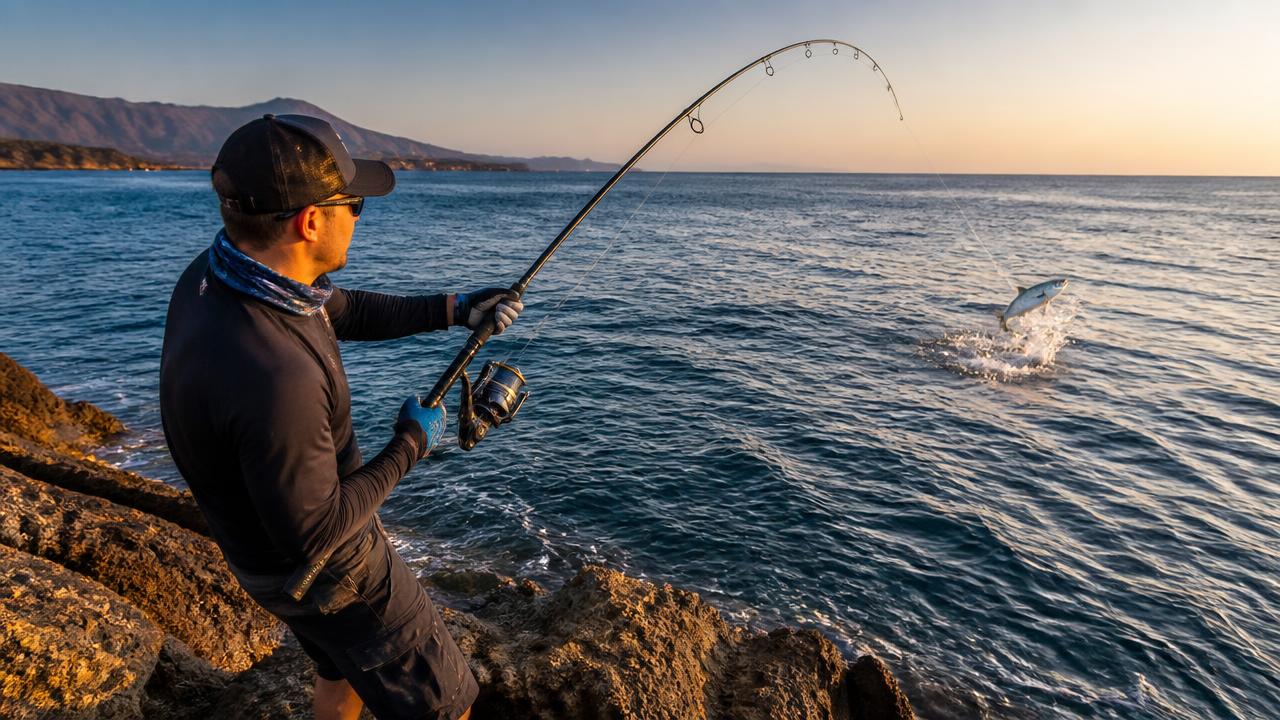
It is possible to hook a tuna from the shore in Cyprus. It is also, and this needs to be said plainly, a rare event that depends on a fairly narrow set of conditions lining up — not a realistic goal for a normal session. This guide explains why that is, what conditions make an encounter more likely, and what tackle is worth having rigged just in case, without pretending shore tuna are an achievable target on demand.
Why shore tuna are rare in Cyprus
Tuna and closely related small pelagics are open-water, highly mobile fish that generally feed well offshore, following baitfish shoals across wide areas of sea rather than holding to fixed structure the way amberjack or reef species do. For one to come within casting range of the shore, a bait shoal has to be pushed unusually close to the coast, often by a combination of current, wind and the fish's own feeding behaviour on a given day.
That combination does happen around Cyprus, particularly off deep-water headlands and points, but it is inherently unpredictable and cannot be planned around in the way a trip for amberjack or general shore jigging species can. Anyone who tells you shore tuna are a reliable target on a specific mark is overselling the odds.
Conditions that improve the odds slightly
Visible surface activity — diving birds, baitfish showering out of the water, or fish visibly crashing bait on the surface — is by far the best indicator that pelagics are within casting range, and it is worth having a rod rigged and ready any time you notice this while shore jigging for other species. Without visible signs like this, blind casting specifically hoping for tuna from the shore has very low odds.
Deep-water marks with strong current and clean, clear water — the same headlands and points that make good general shore jigging ground — are the most plausible places for this kind of encounter, simply because they are the marks closest to the kind of open water tuna actually live in. Warmer months, in line with general pelagic activity around the island, are more likely than winter, though there is no reliable season where an encounter becomes probable rather than merely possible.
What to do if you see surface activity
If you spot birds working or bait being smashed on the surface within casting range, speed matters more than perfect presentation. A fast-sinking metal jig cast beyond and slightly past the activity, then retrieved quickly through the zone, is a sensible approach — these fish are feeding fast and are not looking for a slow, subtle presentation.
Be realistic about the window: surface feeding activity like this can move on or shut down within minutes, so a rigged, ready rod matters far more than a perfect plan formed after the fact.
Tackle to have ready
If you want to be genuinely prepared for the rare chance of a shore tuna, the sensible approach is to fish a slightly more robust setup than you might otherwise choose for general shore jigging on the same mark, rather than owning separate dedicated tuna tackle that might never get used. A rod with solid backbone, a reel with a strong drag and generous line capacity, and PE4 or heavier braid give you a fighting chance if a genuine pelagic does take, since these fish can make long, fast runs that will find any weakness in undersized gear.
A fast-sinking metal jig in a size that can be cast a long way and worked quickly is more useful for this scenario than a slower, fluttering jig style, since the situations where tuna show themselves close to shore usually call for covering a feeding zone fast rather than a patient, methodical retrieve.
Fighting a tuna from the rocks
If you are fortunate enough to hook one, expect a long, fast first run that a firm but not locked drag needs to absorb without breaking anything, followed by a stubborn, circling fight that can take considerable time given the fish's build and strength relative to reef species of similar weight. Keep the rod loaded and avoid pumping too aggressively early in the fight, since a hook can pull under sudden extra pressure during a tuna's characteristic side-to-side head shakes.
Landing a tuna from the shore with no beach access nearby is genuinely difficult and may not always be possible cleanly — this is worth accepting in advance rather than being caught out mid-fight without a plan.
Setting the right expectations
The honest summary is this: fish good ground, be ready with slightly up-rated tackle, and watch for surface activity, but do not plan a session around catching a tuna from the Cyprus shore, and do not be discouraged when, as is normal, it does not happen. Most Cyprus shore jigging sessions that turn into notable pelagic encounters do so unexpectedly, while anglers were fishing for amberjack or general species rather than specifically hunting tuna.
Frequently asked questions
- Can you actually catch tuna from the shore in Cyprus?
- Occasionally, yes, but it is rare and depends on baitfish being pushed unusually close to deep-water marks by a combination of current and conditions. It should not be treated as a realistic goal for a normal session.
- What is the best sign that tuna might be within casting range?
- Visible surface activity — diving birds, baitfish showering, or fish crashing bait on the surface — is by far the clearest indicator, and worth reacting to quickly with a fast-sinking jig if you see it while fishing.
- What tackle should I use in case of a shore tuna encounter?
- A robust shore jigging setup with a strong-backboned rod, a reel with a powerful drag and good line capacity, and PE4 or heavier braid give a reasonable chance against a genuine pelagic, without needing separate dedicated tuna tackle.
- What season is best for a chance at shore tuna in Cyprus?
- Warmer months generally align with more pelagic activity around the island, but there is no season where a shore encounter becomes likely rather than simply possible under the right conditions.
- How hard is it to land a tuna from a Cyprus rock mark?
- Genuinely difficult. Expect a long, powerful fight and be aware that landing the fish cleanly without beach access nearby may not always be achievable, which is worth accepting before you hook one rather than discovering mid-fight.
Recommended gear for this guide
Live picks from the Hobby Mania Cyprus catalogue that suit the setups described above.
Share this guide