Draft — pending fishing-accuracy review. Not listed on the site and not indexed by search engines.
Techniques
Bass Fishing on Cyprus Dams
Fishing.com.cy Editorial · 6 min read · Published · Updated
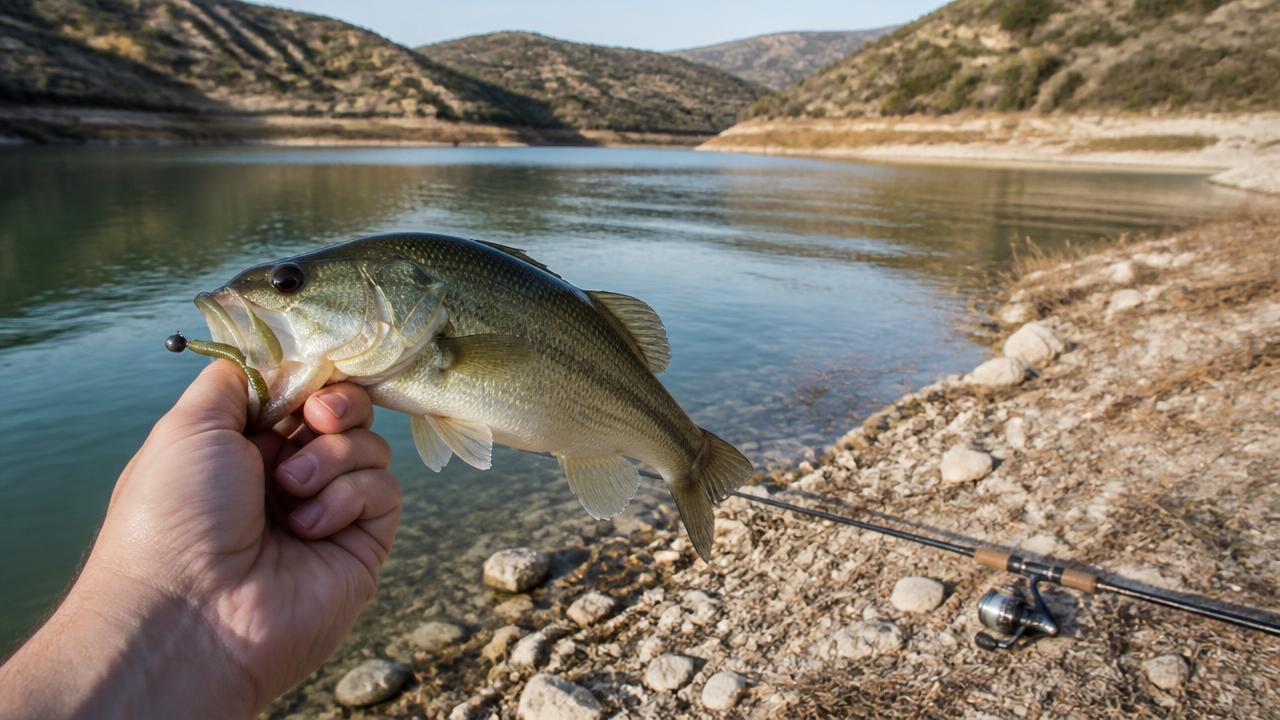
Largemouth bass is the species that draws most freshwater lure anglers to Cyprus’s dams, and understanding how it behaves through the island’s hot, dry-summer climate is the key to consistent results. Bass are ambush predators that respond strongly to water temperature and structure, and on Cyprus dams — with their wide seasonal water-level swings — that behaviour plays out in a distinctly local way. This guide walks through the bass year on Cyprus dams, the structure worth targeting, and the lures, retrieves and tackle that work across the different conditions you’ll encounter.
Understanding Bass Behaviour on Cyprus Dams
Bass are cover-oriented, opportunistic predators. Rather than roaming open water, they typically sit tight to structure — timber, rock, weed edges, drop-offs — and use ambush strikes to feed. Water temperature governs their metabolism and activity level far more than time of day alone, which is why understanding the seasonal temperature curve on Cyprus dams matters more than memorising a single go-to method.
Because Cyprus dams don’t have current to concentrate fish the way a river does, structure and depth changes do that job instead. Learning to read a bank for likely bass-holding features is the single most transferable skill across every dam on the island.
Bass Through the Cyprus Year
As Cyprus dam water begins warming from its winter low through late winter and into spring, bass typically move progressively shallower to feed, and eventually to spawn in suitable margins as temperatures rise further. This period often produces some of the most consistent and visible activity of the year, with fish willing to move further and react more aggressively to a presentation.
Through the peak summer heat, surface and shallow water temperatures on Cyprus dams can climb very high, and bass often respond by holding deeper or tucking into shaded structure during the brightest, hottest part of the day, becoming more catchable again in the low light of early morning and evening. Autumn frequently brings a second, shorter window of shallower activity as the water cools from its summer peak, before winter slows metabolism and activity right down, calling for smaller, slower presentations and a more patient approach worked methodically through likely holding areas rather than covering large amounts of water quickly.
- Spring: warming water pulls bass shallow — often the most reliably active period.
- Summer: high temperatures push fish deep or into shade by day; dawn and dusk improve activity.
- Autumn: a second, shorter shallow-feeding window as temperatures ease.
- Winter: slow metabolism calls for smaller, slower, more patient presentations.
Reading Water Temperature
Water temperature is a moving target across a single Cyprus dam, let alone across the year — shallow margins warm and cool far faster than deep, open water, and shaded banks retain cooler water for longer through summer than sun-exposed ones. A simple habit of checking surface temperature where practical, and paying attention to where the sun has and hasn’t been hitting the water recently, helps narrow down where fish are likely to be sitting on a given day, particularly in the shoulder seasons when conditions are changing quickly.
Structure Bass Relate To
On Cyprus dams, the structure worth prioritising includes flooded or partially submerged timber, rock piles and rock-lined margins, points extending from the bank into deeper water, the mouths of feeder gullies and streams, and any clear depth change or drop-off close to the bank. Weed edges, where present, are also worth working carefully, as are any isolated pieces of cover sitting away from the main bank line — an isolated rock or stump in open water can hold fish that a busier bank simply pushes past.
Because water levels on Cyprus dams move so much across the year, the specific pieces of structure that are actually in the water change too — a flooded bush that was holding fish in a wet spring may be high and dry by late summer, while newly submerged bank vegetation after autumn rains can become instantly productive. Reassess structure on every visit rather than working from memory of a previous trip.
Lure Selection for Cyprus Dam Bass
Soft plastics are the most versatile lure category for Cyprus dam bass — worms, creature baits and paddle-tail swimbaits rigged on a jighead or weedless hook let you work slowly through cover without constantly snagging, and can be fished at almost any depth or speed depending on jighead weight and retrieve. Crankbaits and jerkbaits are excellent for covering water and triggering reaction strikes from fish that aren’t actively feeding but will react to something moving past at speed, particularly useful in spring and autumn when fish are more willing to chase.
Topwater lures — poppers, walking baits and buzzbaits — come into their own during low light in the warmer months, when bass will readily come up through the water column to hit something on the surface. As a general rule, slow presentations tend to out-fish fast, aggressive ones in the cooler months and in summer’s midday heat, while a faster reaction-bait approach can be worth trying in the more active spring and early-autumn windows.
Matching Retrieve to Conditions
A slow, twitch-and-pause retrieve with generous rests on the bottom or against structure is a reliable starting point for soft plastics, particularly in cooler water. In warmer, more active periods, a steadier retrieve or a more erratic, faster twitch on a jerkbait can trigger reaction strikes from fish that would ignore a slower presentation.
Tackle for Cyprus Bass Fishing
A medium-power spinning rod around 2.0–2.4m with enough backbone to work soft plastics through cover and set a hook at range suits most Cyprus dam bass fishing, paired with a 2000–3000 size reel. Braided mainline in a light-to-medium diameter gives good sensitivity for detecting subtle bites on soft plastics, worked with a fluorocarbon leader for its lower visibility in clear water and resistance to abrasion around rock and timber.
Jighead weight should be picked to suit the depth and the amount of cover being fished — lighter jigheads for a slower fall and finesse presentations in open water near the bank, heavier ones to get down quickly or punch through light cover. Carrying a small range of weights lets you adjust on the day rather than being locked into one presentation depth.
A Simple Approach for a First Bass Session
If you’re new to bass fishing Cyprus dams, start at dawn or dusk with a soft plastic worked slowly around any visible structure close to the bank, then experiment with a jerkbait or crankbait to cover more water once you’ve fished the obvious spots. Pay attention to which areas and retrieve speeds produce interest, and build a picture of the water over a few visits rather than expecting to fully understand a dam’s bass population in a single trip.
Frequently asked questions
- What is the best time of year for bass fishing on Cyprus dams?
- Spring, as water temperatures rise from their winter low, is often the most consistently productive period, with fish moving shallow to feed and spawn. Summer favours dawn and dusk sessions due to heat, and autumn can offer a shorter second window of good activity.
- What lures work best for bass on Cyprus dams?
- Soft plastics on a jighead or weedless rig are the most versatile choice for working structure slowly, crankbaits and jerkbaits suit covering water and triggering reaction strikes, and topwater lures excel during low light in warmer months.
- What tackle do I need for Cyprus bass fishing?
- A medium-power spinning rod around 2.0–2.4m, a 2000–3000 size reel, light-to-medium braid and a fluorocarbon leader cover most bass fishing situations on Cyprus dams. Match jighead weight to the depth and cover being fished.
- Where do bass hold on Cyprus dams?
- Bass relate to structure — flooded timber, rock piles, points, feeder-stream mouths, weed edges and drop-offs. Because water levels change through the year, the exact structure in play shifts too, so reassess the bank on every visit.
- Is bass fishing on Cyprus dams good for beginners?
- Yes, with a simple approach — a soft plastic worked slowly around visible structure at dawn or dusk is an accessible starting point. Building familiarity with a chosen dam over several visits helps far more than trying to learn several waters at once.
Recommended gear for this guide
Live picks from the Hobby Mania Cyprus catalogue that suit the setups described above.
Share this guide