Draft — pending fishing-accuracy review. Not listed on the site and not indexed by search engines.
Freshwater
Dam Fishing in Cyprus: The Complete Guide
Fishing.com.cy Editorial · 9 min read · Published · Updated
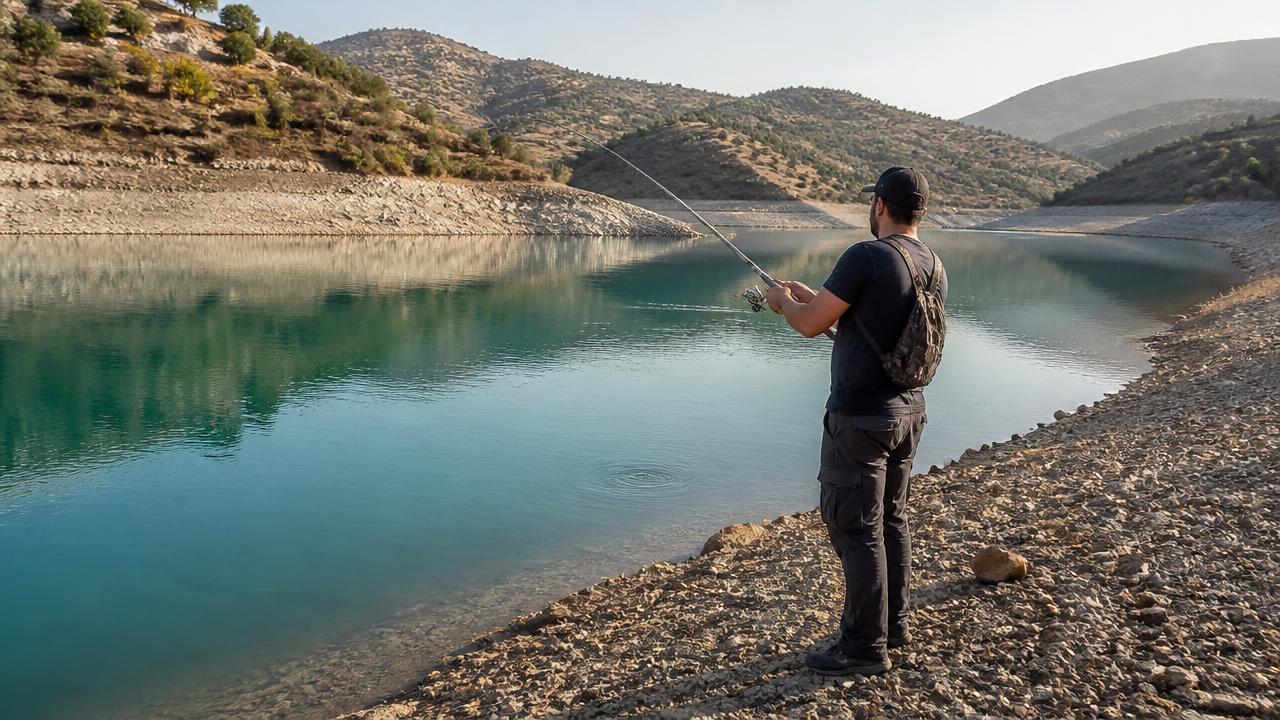
Cyprus is a saltwater island in most anglers’ minds, but its network of hillside and lowland dams offers a completely different kind of fishing. Dam fishing in Cyprus means still water, structure-hunting, and species like largemouth bass and various coarse fish that were introduced over past decades and have since established themselves in these reservoirs. It rewards a different skill set to shore lure fishing on the coast: reading water levels, understanding thermoclines, and working slower, more deliberate presentations around flooded timber, rock margins and drop-offs. This guide covers what actually matters if you want to start fishing Cyprus dams properly — species, seasons, water behaviour, techniques, tackle, and the safety and access realities that any freshwater trip on the island needs to account for.
Why Cyprus Dams Are Worth Fishing
The island’s dams were built primarily for irrigation and water supply, but many have developed stable fish populations over the years, largemouth bass being the headline species for lure anglers. Because these are enclosed, non-tidal bodies of water, the fishing rhythm is completely different from the coast — no swell, no current to speak of, and a much greater emphasis on locating fish by structure and depth rather than by moving water.
For anglers used to LRF, shore jigging or surfcasting around Limassol, Larnaca or Paphos, a session on a dam is a useful change of pace: quieter, often more technical in terms of lure presentation, and a good option on days when the coast is blown out by wind or swell.
Species You’ll Encounter
Largemouth bass is the species most freshwater lure anglers target on Cyprus dams, and it behaves broadly as it does anywhere else in the world — ambushing prey from cover, reacting strongly to water temperature, and shoaling around structure at different times of year. Beyond bass, various coarse species are present in different waters, but stocking, populations and what is actually present can vary between dams and over time.
Because species composition and abundance are not fixed and are not something we can respond to with detailed catch statistics without inventing data, treat any specific claims about numbers or size classes with caution — go and read the water yourself, and talk to other freshwater anglers for current, first-hand information.
Water Levels and Why They Change Everything
The single biggest variable on a Cyprus dam is water level. These are working reservoirs, not managed fisheries, so levels rise through the winter rains and fall steadily across the dry season, sometimes dramatically after a poor winter. A dam that is 80% full in March can look completely different by September, with bankside vegetation, flooded trees and shallow margins exposed or submerged depending on the year.
This matters practically in two ways. First, structure moves — a productive flooded bush in spring may be high and dry by late summer, while a new drop-off appears where the water has retreated. Second, access changes — a bank that was walkable at one level can become a steep, exposed slope of dried mud or loose stone at another. Always assess the current shoreline on the day rather than assuming it matches a previous visit or something you read online.
- Check recent conditions before travelling, as levels can change significantly between visits.
- Expect the bank profile, structure and depth close to shore to shift with the season.
- Retreating water often leaves loose, dusty or unstable ground — footing needs checking, not assumed.
Seasons on Cyprus Dams
Water temperature drives almost everything in freshwater fishing, and Cyprus dams swing through a wide range across the year. Spring, as the water warms from its winter low, tends to pull bass and other species into shallower margins to feed and, later in the season, to spawn — this is often the most reliable period for consistent activity in the shallows.
Summer brings high water temperatures and often a marked drop in the water level itself. Fish frequently sit deeper or hold tight to shade and structure during the heat of the day, with the low-light hours around dawn and dusk producing the most reliable activity. Autumn can see a second, shorter burst of shallower feeding as temperatures ease off from their summer peak, while winter fishing is slower and more deliberate, with fish less willing to chase and better suited to slow, small presentations worked patiently near likely holding areas.
Techniques for Cyprus Dam Fishing
Spinning with soft plastics and hard lures is the mainstay approach for bass and general predator fishing on Cyprus dams. Because there’s no current and no tide to work with, presentation and retrieve speed are almost entirely down to the angler — reading the water for likely holding areas (points, drop-offs, flooded timber, rock piles, weed edges) becomes the main skill.
A slow, methodical approach generally outperforms fast-and-loud fishing on these waters, particularly outside the warmest months. Working a lure through cover rather than around it, pausing on contact with structure, and covering a range of depths on each cast all help locate fish that may be holding tight rather than actively feeding.
Topwater and Low-Light Sessions
Dawn and dusk topwater fishing can be some of the most exciting angling available on Cyprus dams, particularly in the warmer months when fish are more willing to come up in the water column to intercept a surface lure. Calm, glassy conditions in the early morning are ideal for this style.
Fishing Structure
Flooded trees, submerged rock, points and creek channels all concentrate fish. Because Cyprus dam water levels move so much through the year, structure that produces in one season may be irrelevant, dry, or completely repositioned relative to the shoreline a few months later — always reassess rather than relying on memory alone.
Tackle for Freshwater Dam Fishing
A light-to-medium spinning setup covers most Cyprus dam fishing. A rod in the 1.8–2.4m range with a casting weight roughly matched to the lures being fished — light for finesse soft plastics, a touch more backbone for larger hard lures or topwater — gives the versatility needed across a session. A 2000–3000 size spinning reel loaded with 0.10–0.20mm braid or an equivalent light monofilament suits most presentations, paired with a fluorocarbon leader for its lower visibility in clear dam water and its abrasion resistance around timber and rock.
Lure choice should reflect the water: soft plastics (worms, creature baits, swimbaits) fished on a jighead or weedless rig for working structure and cover; crankbaits and jerkbaits for covering water and triggering reaction strikes; topwater poppers and walkers for low-light surface activity. Carrying a small range of weights and sizes lets you adapt to whatever depth and cover you find on the day, since conditions on these reservoirs are rarely identical from one visit to the next.
Reading Cyprus Dam Structure
Without tide or current to concentrate fish, structure and depth changes do the work instead. Points extending into the main body of water, the mouths of feeder streams and gullies, submerged rock lines and any standing or flooded timber are all worth prioritising. Polarised sunglasses help enormously in the clearer margins, letting you spot drop-offs, rock and timber before you cast rather than working blind.
Bank vegetation and the colour of the water itself can also hint at bottom composition and depth — a general skill worth building over a few sessions on the same water rather than something that can be shortcut.
Bank and Water Safety on Cyprus Dams
Dam banks are a different safety environment to the coast, but not a risk-free one. Fluctuating water levels regularly leave loose, dried mud, unstable stone or steep drop-offs exposed at the waterline, and these can be genuinely treacherous underfoot, especially after recent low water or rain. Wear footwear with good grip, test ground before committing your weight near the water’s edge, and be conservative about how close you fish to a steep or unstable bank.
As with any solo fishing trip, let someone know where you are going and roughly when you expect to be back, avoid fishing remote banks alone after dark, and carry a means of communication. Some dam surrounds are steep, remote hillside terrain with limited mobile signal or vehicle access in places — plan your route in and out before you commit to a spot, and always leave yourself an easy way back off the bank.
Permits, Access and Rules — Always Verify Before You Go
This is the single most important practical point in this guide: rules around fishing Cyprus’s dams — including any permit requirements, closed areas, closed seasons and general access — are set by the relevant authorities and can and do change over time. We deliberately do not state specific permit costs, closed dates or access details here, because publishing anything specific risks being out of date the moment it’s written, and getting it wrong could put you on the wrong side of the rules or, worse, in an area that isn’t safe or permitted to fish.
Before planning any dam fishing trip in Cyprus, verify current requirements directly with the Department of Fisheries and Marine Research and the Water Development Department, or the locally relevant authority for the dam in question. These bodies are the source of truth on what is currently required, permitted or restricted — not any third-party blog, including this one.
Getting Started: A Simple First Trip Plan
If you’re new to Cyprus dam fishing, keep the first session simple. Confirm current rules and any permit requirements with the relevant authority before you go, pick a dam you can research a little in advance, and plan to fish either the first couple of hours after sunrise or the last couple before sunset, when activity tends to be more reliable across most of the year.
Carry a small, versatile lure selection rather than a huge tackle box — a few soft plastics on jigheads, one or two crankbaits or jerkbaits, and a topwater lure for low light will let you cover most situations while you learn how a given dam fishes. Spend time watching the water and reading structure before your first cast; on a still, tideless venue, understanding where fish are likely to be sitting is most of the battle.
Frequently asked questions
- Do I need a permit to fish Cyprus dams?
- Requirements for fishing Cyprus’s dams are set by the relevant authorities and can change, so always verify current rules directly with the Department of Fisheries and Marine Research and the Water Development Department before planning a trip, rather than relying on any third-party source.
- What fish species can I catch in Cyprus dams?
- Largemouth bass is the main species targeted by lure anglers on Cyprus dams, alongside other coarse species present in some waters. Populations vary between dams and over time, so it’s worth speaking to other local freshwater anglers for current, first-hand information.
- When is the best time of year to fish Cyprus dams?
- Spring, as water temperatures rise, tends to bring fish into shallower margins and is often the most consistently productive period. Summer favours dawn, dusk and deeper structure due to heat, while autumn can offer a shorter second window of shallower activity before winter slows things down.
- Why do Cyprus dam water levels change so much?
- Cyprus dams are working reservoirs for irrigation and water supply, not managed fisheries, so levels rise through winter rainfall and fall through the dry season, sometimes sharply after a poor winter. This changes structure, depth and bank access, sometimes substantially between visits.
- What tackle do I need for Cyprus dam fishing?
- A light-to-medium spinning rod around 1.8–2.4m, a 2000–3000 size reel with light braid or mono, and a fluorocarbon leader cover most situations. Bring a small range of soft plastics, hard lures and a topwater lure to adapt to conditions on the day.
- Is it safe to fish alone at Cyprus dams?
- It can be, but banks around fluctuating water levels can be steep, loose or unstable, and some dam surrounds are remote with limited signal. Tell someone your plans, wear grippy footwear, test ground near the waterline before committing weight, and avoid isolated banks after dark.
Recommended gear for this guide
Live picks from the Hobby Mania Cyprus catalogue that suit the setups described above.
Share this guide