Draft — pending fishing-accuracy review. Not listed on the site and not indexed by search engines.
Gear & Tackle
Best Lures for Bass Fishing on Cyprus Dams
Fishing.com.cy Editorial · 6 min read · Published · Updated
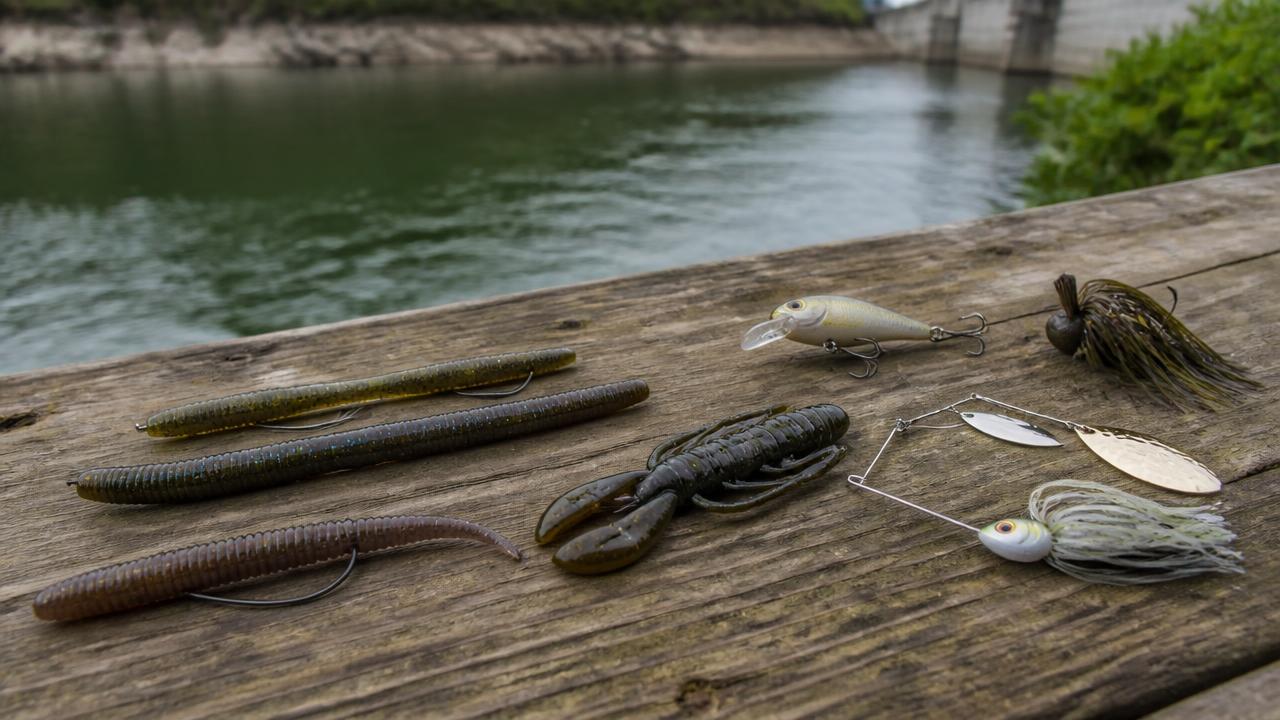
Cyprus dam bass are not fussy in the way people sometimes assume, but they are seasonal, clarity-sensitive and often pressured by low, clear water for large parts of the year. The lures below cover the situations you will actually meet on Kouris, Asprokremmos, Germasogeia, Polemidia, Lefkara and Dipotamos, and this guide sets out when each one is the right tool rather than just listing tackle. As with everything freshwater in Cyprus, confirm current access and any permit requirements with the Water Development Department and Department of Fisheries and Marine Research before you go.
Soft plastics: the everyday workhorse
If you fish only one family of lure on a Cyprus dam, make it soft plastics. They are cheap, versatile, and forgiving of a slow retrieve, which matters because dam bass often want a bait that barely moves. A senko-style stick worm rigged weightless or on a light jighead is the single most reliable searching bait for stained-to-clear water in spring and autumn.
Creature baits and craws add profile and appendage movement that can trigger fish sitting tight to cover, particularly around flooded brush, rock piles and the margins of standing timber where dams have inundated old field boundaries. Paddletail swimbaits fill a different role: fished on a jighead they give you a searching bait with built-in action for covering water quickly along clay banks and points.
- Stick worms (senko-style): weightless or light jighead, slow fall, works almost year-round
- Creature baits and craws: flipped or pitched into cover for reaction bites
- Paddletail swimbaits: faster searching retrieve along points and banks
Jig techniques: matching the rig to the ground
How you present a soft plastic often matters more than which one you tie on. Each rig below solves a different problem, and carrying two or three set up on separate rods saves time when conditions change through a session.
Texas rig
A bullet weight pegged or free-running ahead of a weedless-hooked plastic. This is the rig for punching into flooded brush, submerged branches and any snaggy structure where an exposed hook would foul constantly. Slow lifts and drops worked tight to cover are more productive than a straight retrieve.
Carolina rig
A heavier weight set above a swivel and long leader lets the bait waft naturally along the bottom while the weight telegraphs contact with rock and gravel. It suits open, clean bottom sections of a dam bed where you want to cover ground methodically rather than pick apart cover.
Ned rig
A short, blunt-nosed plastic on a light mushroom-style jighead, fished with a slow drag-and-pause. This is the finesse answer to pressured, clear-water fish that have seen plenty of standard presentations, and it excels on the clearer dams later in summer when bass sit deeper and more cautious.
Drop shot
A weight below the bait and the hook nose-rigged some way above it keeps the plastic suspended in the strike zone while you hold position over deeper structure. Useful when sonar or careful bank observation shows fish holding at a specific depth off a drop-off rather than shallow.
Weightless
Simply nose- or wacky-rigged with no added weight, a soft plastic falls with maximum natural action. This is the go-to around visible cover in calm conditions and shallow water, where any added weight would make the fall look unnatural and spook cautious fish.
Crankbaits: covering water and finding depth
Crankbaits earn their place when you need to find fish rather than pick apart known cover. A shallow-diving crank worked along clay banks and points locates active fish quickly in stained water during spring warm-ups, while a deeper-diving model that bumps bottom at two to four metres can draw reaction strikes from fish holding on drop-offs in summer.
The key with crankbaits on Cyprus dams is matching dive depth to the actual water depth over the structure you are fishing; a lure that never reaches bottom is just swimming past fish rather than provoking them.
Minnows and jerkbaits
Slender minnow-style hard lures, twitched and paused, imitate the small fry that Cyprus dam bass feed on heavily once water warms. They are particularly effective in clearer water where a subtler profile out-fishes a bulkier crankbait, and the pause is often when the take comes, so resist the urge to retrieve too briskly.
Topwater: low light and calm water
Surface lures produce some of the most exciting bass fishing available on Cyprus dams, but the window is narrower than for subsurface baits. Early morning and last light, in calm conditions with little wind chop, are when a walk-the-dog stickbait or popper worked over shallow flats and along shaded banks draws visible, often violent strikes.
Wind and glare kill topwater fishing quickly, so treat it as a first-and-last-hour tactic rather than an all-day approach, and switch to a soft plastic or crankbait once the sun is properly up.
Spinnerbaits: stained water and cover
A spinnerbait's flash and vibration make it a strong choice in the more coloured water that follows rain or wind-stirred banks, and its semi-weedless design lets it be worked through light cover that would foul a treble-hooked lure. It is less essential in the gin-clear conditions many Cyprus dams show for much of the summer, but worth carrying for the days after a change in weather.
Matching lures to season and water clarity
Cyprus dam levels and clarity shift through the year, and lure choice should shift with them rather than staying fixed on a favourite bait.
- Spring, stained water after rain: spinnerbaits, shallow crankbaits, soft plastic craws around new cover
- Early summer, clearing water: minnows, paddletails, Texas-rigged plastics along points
- High summer, low and clear: ned rigs, drop shots, weightless plastics, dawn and dusk topwater
- Autumn, cooling and often more coloured: crankbaits and spinnerbaits to cover water fast as fish feed up
Depth: reading where the fish are holding
As a rough rule, target shallower cover and flats early and late in the day and in cooler months, and expect fish to slide onto deeper drop-offs, old creek channels and points during the heat of a summer afternoon. Carrying at least one lure capable of working two to four metres deep, such as a deep crank or a Carolina-rigged plastic, means you are not left guessing when fish have clearly moved off the bank.
Frequently asked questions
- What is the single best all-round lure for Cyprus dam bass?
- A soft plastic stick worm, rigged weightless or on a light jighead, covers more situations than any other lure on Cyprus dams. It works in clear and stained water, shallow and moderately deep, and suits the slow presentations that pressured reservoir bass often prefer.
- Do I need topwater lures for Cyprus dam fishing?
- They are not essential but are worth carrying. Early morning and last light in calm conditions can produce spectacular surface strikes, though the window is short and topwater fades once sun and wind pick up, so treat it as a bonus tactic rather than a mainstay.
- How does water clarity change lure choice on Cyprus dams?
- Clearer water generally calls for subtler, more natural presentations such as minnows, ned rigs and finesse plastics, while stained or coloured water after rain rewards lures with more flash and vibration, such as spinnerbaits and shallow crankbaits that fish can locate by feel as much as sight.
- Are crankbaits worth carrying on a Cyprus dam trip?
- Yes, particularly for searching unfamiliar bank. A shallow crank quickly reveals whether active fish are present along a stretch, and a deeper-diving model that bumps bottom can draw reaction strikes from fish holding on drop-offs when slower baits are being ignored.
Recommended gear for this guide
Live picks from the Hobby Mania Cyprus catalogue that suit the setups described above.
Share this guide