Draft — pending fishing-accuracy review. Not listed on the site and not indexed by search engines.
Gear & Tackle
Best HRF rods, reels and braid for Cyprus
Fishing.com.cy Editorial · 4 min read · Published · Updated
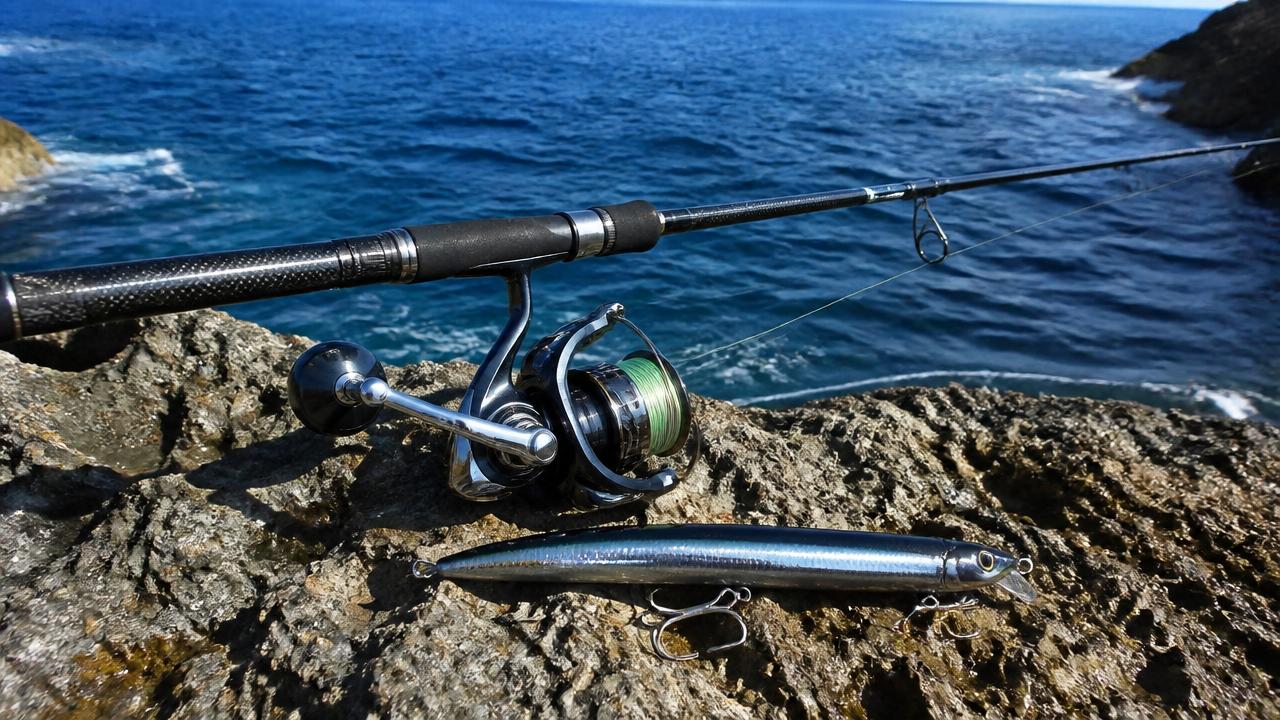
Getting HRF tackle right in Cyprus is less about chasing the lightest or most expensive kit and more about matching strength to the ground you're fishing. This guide walks through rods, reels, braid, leader and terminal tackle for heavy rock fishing, and the trade-offs to weigh up at each stage.
Rod length and power
Most HRF rods fall in the 2.4–3.0 m range. Shorter rods, towards 2.4 m, give more direct control when fighting a fish at close range and are easier to manoeuvre on awkward, cluttered rock ledges. Longer rods, up to 3.0 m, help with casting distance and keeping a lure working at range along a rock face, which matters more on open headlands than in tight gully fishing.
Casting weight ratings of roughly 15–50 g suit the lure sizes typical of HRF — heavier than an LRF rod, lighter than a dedicated shore jigging stick built for 60–150 g metals. Action should be fast, with power concentrated in the butt section, so you can lift a fish's head away from structure the instant it's hooked rather than playing it out on a soft tip.
- 2.4 m: better close-range control on tight, cluttered ledges
- 3.0 m: better casting distance along open rock faces
- 15–50 g casting weight covers most HRF lure sizes
- Fast action with a strong butt section for early fish control
Reel size and drag
A 4000–6000 size spinning reel is the standard HRF choice. Bigger sizes within that range give more line capacity and a stronger drag system, which matters when a fish is trying to bury itself and you need to apply firm, sustained pressure rather than letting the fish take line.
Drag smoothness matters, but raw stopping power matters more in this style — HRF is generally fished with the drag set fairly firm from the outset, accepting a higher risk of a pulled hook in exchange for a much better chance of turning the fish before it reaches cover.
Sealing against salt spray and grit is worth paying attention to, since HRF marks put reels through more abuse — spray, dust, occasional knocks against rock — than most other styles of shore fishing.
Choosing PE braid
PE1.5–PE3 covers the great majority of HRF fishing in Cyprus. Lighter within that range, around PE1.5–PE2, suits lighter lures and gives better casting distance and feel; heavier, PE2.5–PE3, gives more raw stopping power for the biggest ground and largest expected fish, at some cost to casting distance and finesse.
Whichever weight you choose, braid should be checked regularly for damage near the leader knot, since this is the section that takes the most abuse from contact with rock during the fight.
Fluorocarbon leader strength
Leader is arguably the single most important tackle decision in HRF, because the fight happens at close range against sharp rock. Fluorocarbon in the 40–60 lb range is standard, with anglers fishing the roughest, most cave-riddled ground or targeting larger species leaning towards the top of that range or beyond.
Leader length also matters more here than in open-water fishing — a metre or more of leader gives a better buffer against abrasion than the shorter lengths sometimes used for lighter styles. Retie regularly; a leader that has been dragged over rock repeatedly during a session can lose a significant amount of its strength even if it looks undamaged.
Terminal tackle
Hooks, split rings, swivels and jigheads should all be rated well above what the lure weight alone would suggest, because the forces involved in stopping a fish over rock are considerably higher than simply casting and retrieving the lure. A weak link in terminal tackle is the most common reason a well-matched rod, reel and leader combination still loses a fish.
Carry more terminal tackle and spare leader material than you think you'll need — snagging and losing gear on broken ground is a routine part of HRF fishing, not a sign of doing something wrong.
Putting a setup together
A sensible general-purpose HRF setup for Cyprus is a 2.7 m rod rated around 20–50 g, a 5000 size reel with a strong drag, PE2 braid and a 50 lb fluorocarbon leader of at least a metre. This covers most of the ground and species discussed in this guide without being over- or under-gunned for any of it, and gives a solid base to adjust from once you know which type of ground and species you're focusing on.
Frequently asked questions
- What rod length is best for HRF fishing in Cyprus?
- Most anglers use something between 2.4 and 3.0 m. Shorter rods give better close-range control on tight, cluttered ledges, while longer rods help with casting distance along open rock faces. Both are valid depending on the ground you're fishing.
- What PE braid size is best for HRF?
- PE1.5–PE3 covers most HRF work in Cyprus. Lighter braid within that range suits lighter lures and gives better feel and casting distance, while heavier braid gives more raw power for rough ground and larger species.
- How heavy should my leader be for HRF fishing?
- 40–60 lb fluorocarbon is standard, with heavier leaders sensible over the roughest, most cave-riddled ground or when targeting larger species. Leader length of a metre or more gives a better buffer against abrasion than shorter lengths.
- Do I need a special reel for HRF fishing?
- A 4000–6000 size spinning reel with a strong, smooth drag and decent sealing against salt spray is the standard choice. Raw stopping power matters more than speed, since HRF is generally fished with a firm drag setting to control fish quickly.
Recommended gear for this guide
Live picks from the Hobby Mania Cyprus catalogue that suit the setups described above.
Share this guide