Draft — pending fishing-accuracy review. Not listed on the site and not indexed by search engines.
Fishing Spots
HRF fishing in Famagusta
Fishing.com.cy Editorial · 4 min read · Published · Updated
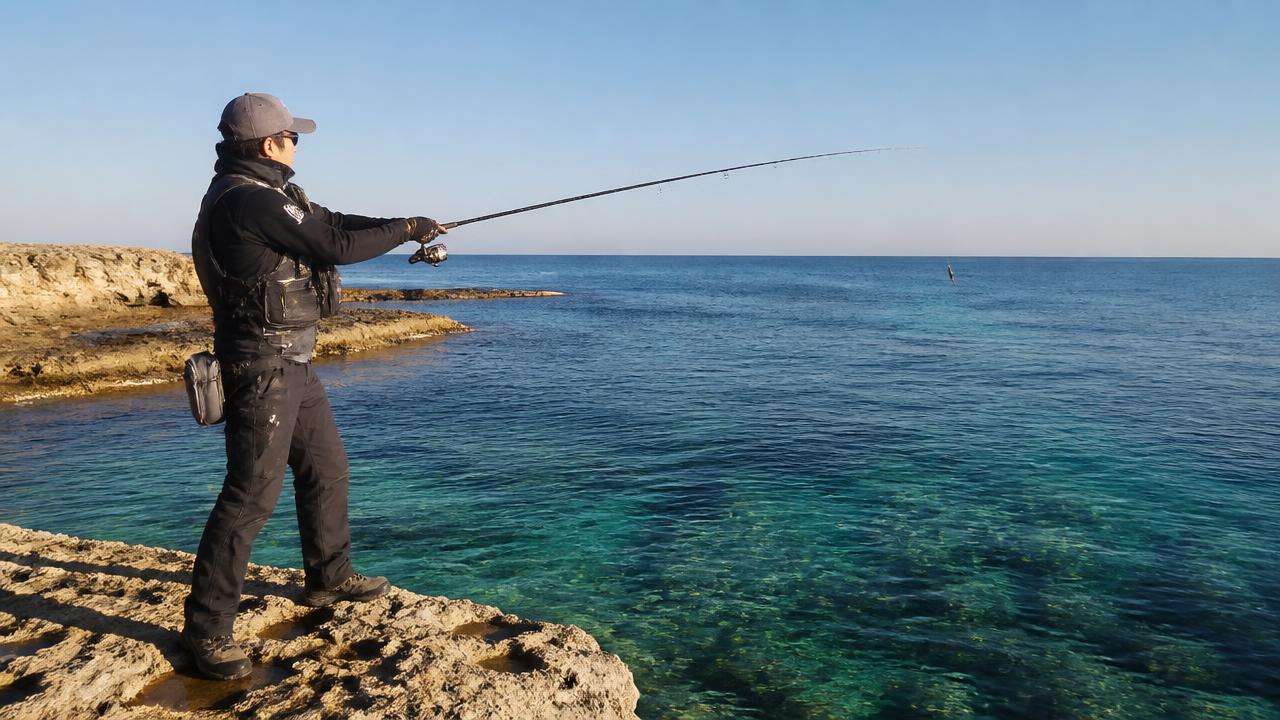
The Famagusta district, running from Cape Greco through Protaras and Ayia Napa and on towards the Cyclops Cave area, is widely regarded as Cyprus's premier HRF ground. Deep water sits close to a shoreline of steep, broken limestone, which is exactly the combination this style of fishing needs. It is also serious ground, and this guide covers both what makes it fish so well and why it demands real respect.
Why this coastline suits HRF
The geology of the Famagusta district is what makes it special for rock anglers. Rather than gently shelving sand, much of this coast drops away steeply from the rock edge, meaning water depths that would normally require a boat trip are reachable within a short cast from dry land.
That depth close in draws bigger predatory fish tight to the structure, particularly around dawn and dusk when they push in to hunt baitfish sheltering among the rocks. It is this combination — depth, structure and baitfish activity all stacked in one place — that makes the area so consistently productive for HRF species.
Cape Greco and the Protaras headlands
The headlands around Cape Greco are the most exposed and dramatic ground in the area, with rock ledges dropping straight into open water. This is prime territory for dentex and amberjack hunting along the rock face, worked with hard lures or metal jigs cast tight to the structure and retrieved with a twitching, erratic action.
It is also the most demanding ground to fish safely. Swell wraps around these exposed points more than it does in the sheltered bays further along the coast, and wave action can arrive with little visual warning on a day that otherwise looks calm.
Ayia Napa's mixed rock and quieter coves
Moving towards Ayia Napa, the coastline includes quieter coves alongside more exposed sections, giving options depending on conditions. The broken rock and boulder ground here suits a slower approach with soft plastics worked along the bottom for grouper and large wrasse, rather than the faster lure work that suits the open headlands.
These slightly more sheltered stretches are also a sensible choice for anglers newer to HRF, offering similar ground types with somewhat reduced swell exposure on all but the roughest days.
The Cyclops Cave area
Further round the coast, the ground associated with the Cyclops Cave area is known for its cave systems and gullies cut into the rock — classic ambush territory for grouper. Fishing tight to these features with a slow-worked lure, letting it settle into the gaps between movements, is the standard approach.
This is also an area where the terrain itself demands caution: cave mouths and narrow gullies are precisely the features that funnel wave energy and can catch out an angler who is focused on the fishing rather than the sea.
Tackle notes for this ground
Given the depth and the aggressive species on offer, most anglers fish towards the heavier end of standard HRF tackle here — PE2–PE3 braid and 50–60 lb fluorocarbon leader are common choices, with a rod capable of applying real pressure early in the fight to keep fish away from the rock.
Safety on the Famagusta coast
This is genuinely serious ground, and it deserves a genuine safety mindset. The limestone is slippery even when it looks dry, exposed headlands like Cape Greco can see swell build with little warning, and several marks require an awkward scramble to reach the water's edge.
Never fish this stretch alone if you can avoid it, and if you do, let someone know exactly where you'll be. Wear proper grippy footwear rather than trainers, watch the sea for several minutes before setting up to understand where the larger sets are breaking, and always identify an escape route off the rock before you start fishing. Conditions here can change faster than they look like they will from the car park.
- Check the swell forecast specifically before heading to exposed headlands like Cape Greco
- Avoid fishing alone; tell someone your plan if you must
- Wear grippy rock fishing footwear and keep a dry pouch for your phone
- Identify your escape route before you start fishing, not after conditions change
Frequently asked questions
- Is Famagusta the best area in Cyprus for HRF fishing?
- It's widely regarded as one of the best, thanks to deep water sitting close to steep, broken rock along much of the coast from Cape Greco through Protaras, Ayia Napa and towards the Cyclops Cave area. Good HRF ground exists elsewhere on the island too, but this stretch has an unusually high concentration of it.
- What species can you catch HRF fishing around Ayia Napa and Protaras?
- Grouper and large wrasse are common over the broken rock and boulder ground, with dentex and amberjack turning up around the deeper headlands, particularly at dawn and dusk. Amberjack should be treated as a seasonal, condition-dependent bonus rather than a reliable catch.
- Is the Cape Greco area safe to fish?
- It can be fished safely, but it is exposed and unforgiving when conditions are wrong. Swell can build quickly on this stretch, the rock is slippery when wet, and access to some ledges involves an awkward scramble, so checking conditions and never fishing alone matters more here than on gentler ground.
- What tackle suits the Famagusta HRF ground?
- Given the depth and the size of fish on offer, PE2–PE3 braid with 50–60 lb fluorocarbon leader on a rod with real backbone is a sensible starting point for the more exposed headlands, scaling down slightly for the quieter coves and boulder ground.
Recommended gear for this guide
Live picks from the Hobby Mania Cyprus catalogue that suit the setups described above.
Share this guide