Draft — pending fishing-accuracy review. Not listed on the site and not indexed by search engines.
Fishing Spots
Fishing Cyclops Cave: A Deep-Water Rock Mark Guide
Fishing.com.cy Editorial · 9 min read · Published · Updated
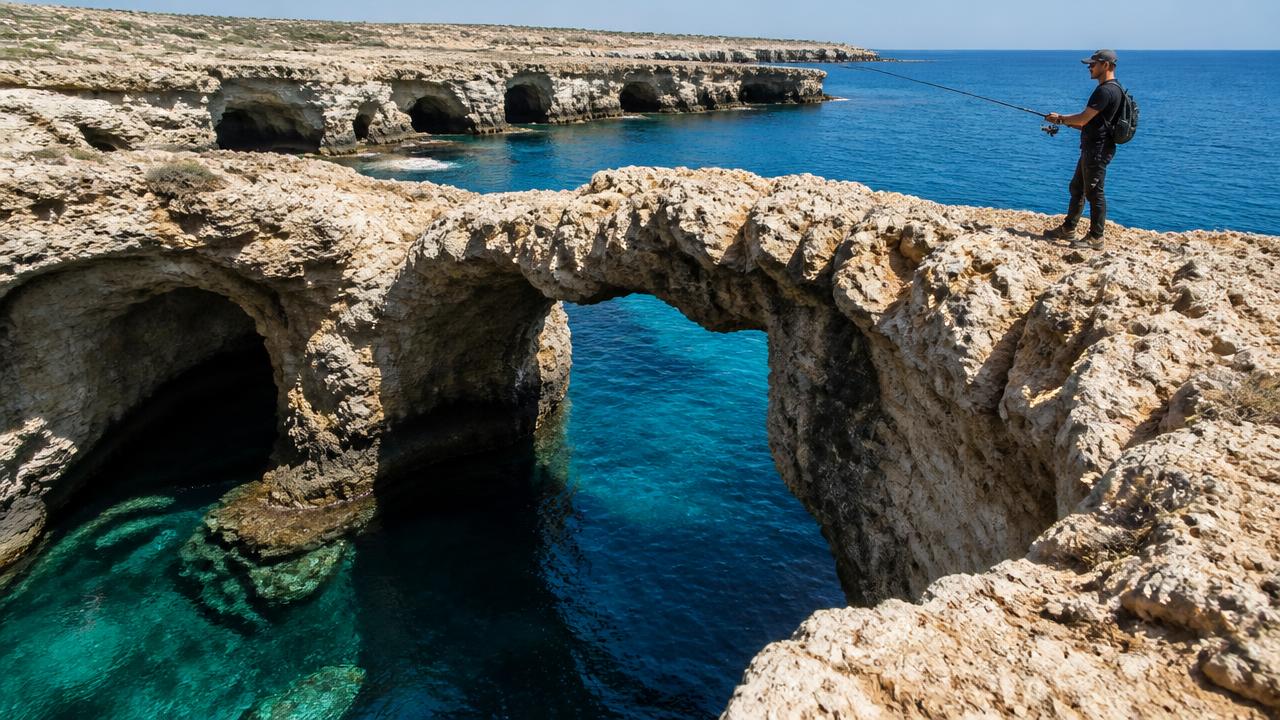
Cyclops Cave is one of the more distinctive rock marks on the Cyprus coast, known among shore anglers for one specific thing: genuinely deep water sitting very close to the rocks. That combination of depth and proximity is what makes it interesting for shore jigging, and also what makes it a mark that deserves to be treated with real caution. This guide sets out what the ground is actually like, what that means for tackle and technique, what you can honestly expect to catch, how difficult the access is, and — at some length, because it matters — how to fish it safely. There are no GPS coordinates here; this is general orientation, not a route to a fragile or dangerous micro-mark.
Overview
Cyclops Cave sits on a rugged section of coastline where the limestone drops away steeply rather than shelving gradually, meaning water that would normally require a boat or a long cast from a beach is instead reachable within a rod's length of the rock edge. That is unusual on an island where much of the shoreline is shallow for some distance out, and it is the reason the mark has a reputation among shore jiggers and LRF anglers looking for deeper-water species without a boat.
It is not, however, an easy or forgiving mark. The same steep drop-off that brings deep water close to shore also means limited flat ground to fish from, exposure to swell with little warning, and genuinely difficult footing. Anyone considering fishing here should read the access and safety sections below in full before planning a trip.
The environment: deep water close to shore
The defining feature of this ground is depth. Where many Cyprus shore marks require long casts over gradually deepening water to reach worthwhile depth, at Cyclops Cave the seabed falls away quickly right at the rock edge, putting genuinely deep water within easy casting range — in places, almost underfoot. This creates a much more vertical fishing environment than most Cyprus rock marks.
The rock itself is limestone, uneven, and pitted with gullies, small caves and undercuts, which is part of what gives the area its name and its character. This structure holds fish, but it also means the platforms anglers stand on are narrow, irregular, and often not far above the waterline, with limited retreat space if conditions change.
What deep water close to shore means for tackle and technique
Because usable depth is available so close in, anglers do not need to out-cast anyone to get into productive water, but they do need tackle capable of working lures effectively through a long vertical column rather than a shallow horizontal retrieve. Metal jigs in the 30 to 80 gram range, worked with a mix of vertical jigging and long sweeping retrieves back up through the water column, suit this ground better than the flatter, longer retrieves used on shallower marks.
A shore jigging rod rated for these jig weights, paired with a reel capable of holding PE3 to PE4 braid and a robust drag system, gives the platform to actually turn a strong fish before it reaches the sharp, barnacle-covered rock edge below the angler's feet — a real risk on this kind of ground, since a hooked fish has very little distance to run before it is back among structure. A fluorocarbon leader of at least 40 to 60lb, and heavier again if targeting the biggest fish likely to be present, is sensible insurance against abrasion.
LRF tactics also work here in calmer conditions, particularly worked along visible structure and gullies at the platform edge, but the same abrasion risk applies to lighter leaders and tackle should be chosen with that in mind rather than assuming clear water means an easy fight.
Realistic species expectations
The deep water and structure at marks like this genuinely can produce amberjack, leerfish and other hard-fighting predators that are harder to reach from shallower shore marks, and this is the main draw for shore jigging anglers. On their day these fish can be present in numbers close to the rock, which is part of the mark's reputation.
It is important to be honest about the rest of the picture, though. Pelagic visitors such as small tuna species or mahi mahi are sometimes reported from deep-water marks like this in late summer and early autumn when bait shoals move close to shore, but these are genuinely rare, highly seasonal, and entirely dependent on conditions lining up on the day. They should never be treated as an expected catch, only as a rare bonus that occasionally rewards persistent, well-prepared anglers fishing the right conditions at the right time of year. Most sessions, even good ones, will not include a pelagic encounter, and building an expectation around one is a route to disappointment rather than a realistic plan.
On quieter days or in calmer conditions, LRF species such as wrasse and small groupers are present around the shallower structure at the platform edges, giving a fallback option when jigging is slow.
Difficult access
Reaching fishable ground at Cyclops Cave is not straightforward. Paths, where they exist, tend to be uneven, unmarked and can involve scrambling over broken rock rather than walking a clear trail. There is limited flat platform space once at the water's edge, and what is there can be narrow, sloped, or positioned right above deep water with no gentle transition.
Carrying a full shore jigging kit — rod, reel, jig bag, net or gaff, and safety gear — over this kind of ground is genuinely more demanding than at most Cyprus marks, and anglers should plan for a slower, more careful approach in both directions, allowing extra time and keeping hands as free as possible by using a proper rucksack or tackle bag rather than loose gear.
Safety: read this before you go
This mark deserves a genuinely serious safety passage, not a token one, because the combination of deep water, exposed rock and difficult access raises the stakes well above a typical Cyprus shore session.
Swell and wave sets
Because deep water sits so close to the rock, swell arrives with very little warning and with more force than on marks where wave energy is dissipated over a shallow shelf. Waves at marks like this often arrive in sets, with several smaller waves followed by one noticeably larger surge — a pattern that catches out anglers who judge the sea by the first few waves they see. Watch the water for several minutes before setting up, note where the largest recent surge reached, and always fish with a clear sense of which direction offers higher, safer ground.
Slippery limestone
Limestone that is wet, algae-covered or regularly splashed by spray becomes extremely slippery, often more so than it looks. Areas that appear dry can still be damp with sea spray in anything more than a light breeze. Treat every surface near the water's edge as potentially slick, test footing before committing weight to it, and avoid unnecessary movement close to the edge, particularly while playing a fish or handling jigs and hooks.
Footwear
Proper footwear is not optional on this ground. Studded or felt-soled wading boots, or purpose-made rock fishing boots with a grippy sole, make a real difference on wet limestone. Sandals, trainers with smooth soles, or bare feet are genuinely dangerous here and should not be worn.
Never fish alone
Given the isolation and difficulty of the access, fishing this mark alone significantly increases the risk of any incident going unnoticed and unresponded to. Fish with a companion where possible, and if fishing alone cannot be avoided, tell someone reliable exactly where you are going and when you expect to be back, and check in with them afterwards.
Escape routes
Before starting to fish, identify a clear route away from the water's edge to higher ground that does not depend on retracing exact footsteps under pressure. Keep this route in mind throughout the session, and do not let gear, bags or rods block it. If a mark only has one narrow, difficult path in and out, factor that into how close to the edge you are willing to fish and how much swell you are willing to tolerate.
Checking forecasts
Always check a current, reliable marine or wind forecast before travelling to this mark specifically, not just a general regional forecast, and pay particular attention to swell height and direction rather than just wind speed, since swell generated well offshore can arrive with little local wind to warn of it. If there is any doubt about conditions, or if a forecast shows rising swell later in the session, choose a more sheltered mark instead — no fish is worth the risk this ground can present in poor conditions.
Conditions and seasonality
Calmer conditions with light or offshore winds are essential here, both for safety and because clean, settled water gives the best chance of the deeper species this mark is known for. Late summer and early autumn tend to bring the most consistent activity from larger predators and the small chance of pelagic visitors, while spring can fish well for a broader mix of species in more moderate temperatures. Winter fishing is possible on rare settled days but the mark is more often unfishable or unsafe during the stormier months, and patience in waiting for the right weather window matters more here than at most locations.
Etiquette
Given the difficulty of access and the limited platform space, be considerate of other anglers already fishing the mark and avoid crowding a small area of rock. Take all tackle waste, line and packaging away, since litter left on exposed rock marks like this tends to stay for a long time. Leave detailed directions to any specific ledge or platform out of public posts and conversations to help protect both the ground and less experienced anglers who might otherwise be tempted onto ground beyond their ability.
Frequently asked questions
- Is Cyclops Cave suitable for beginner anglers?
- No, this is not a beginner mark. The difficult access, steep drop-offs and exposure to sudden swell make it more suitable for experienced shore anglers who are confident on rough rocky ground and comfortable assessing sea conditions before committing to a session.
- What is the main technique used at Cyclops Cave?
- Shore jigging with metal jigs is the main technique, taking advantage of the genuinely deep water close to shore. LRF tactics also work around shallower structure at the platform edges, particularly in calmer conditions.
- Can you catch tuna or mahi mahi at Cyclops Cave?
- It is possible but genuinely rare and highly seasonal, generally limited to late summer and early autumn when bait shoals move close to shore. These pelagic visitors should be treated as an occasional bonus, not an expected catch.
- How dangerous is fishing at Cyclops Cave?
- The combination of deep water close to the rocks, slippery limestone and difficult, isolated access makes this a genuinely higher-risk mark than most Cyprus shore locations. It should only be fished with proper footwear, a companion where possible, and a clear check of the forecast and swell beforehand.
- What footwear should I wear fishing rocky marks like Cyclops Cave?
- Studded or felt-soled wading boots, or dedicated rock fishing footwear with a grippy sole, are strongly recommended. Smooth-soled shoes, trainers or sandals are not safe on wet limestone.
- Are there GPS coordinates for the exact fishing spots at Cyclops Cave?
- This guide deliberately does not give exact coordinates or specific ledges, both to protect the ground and because access and safety at this kind of mark should always be judged in person, on the day, rather than from a fixed point shared online.
Recommended gear for this guide
Live picks from the Hobby Mania Cyprus catalogue that suit the setups described above.
Share this guide