Draft — pending fishing-accuracy review. Not listed on the site and not indexed by search engines.
Fishing Spots
Fishing in Larnaca: A Complete Shore Angler’s Guide
Fishing.com.cy Editorial · 7 min read · Published · Updated
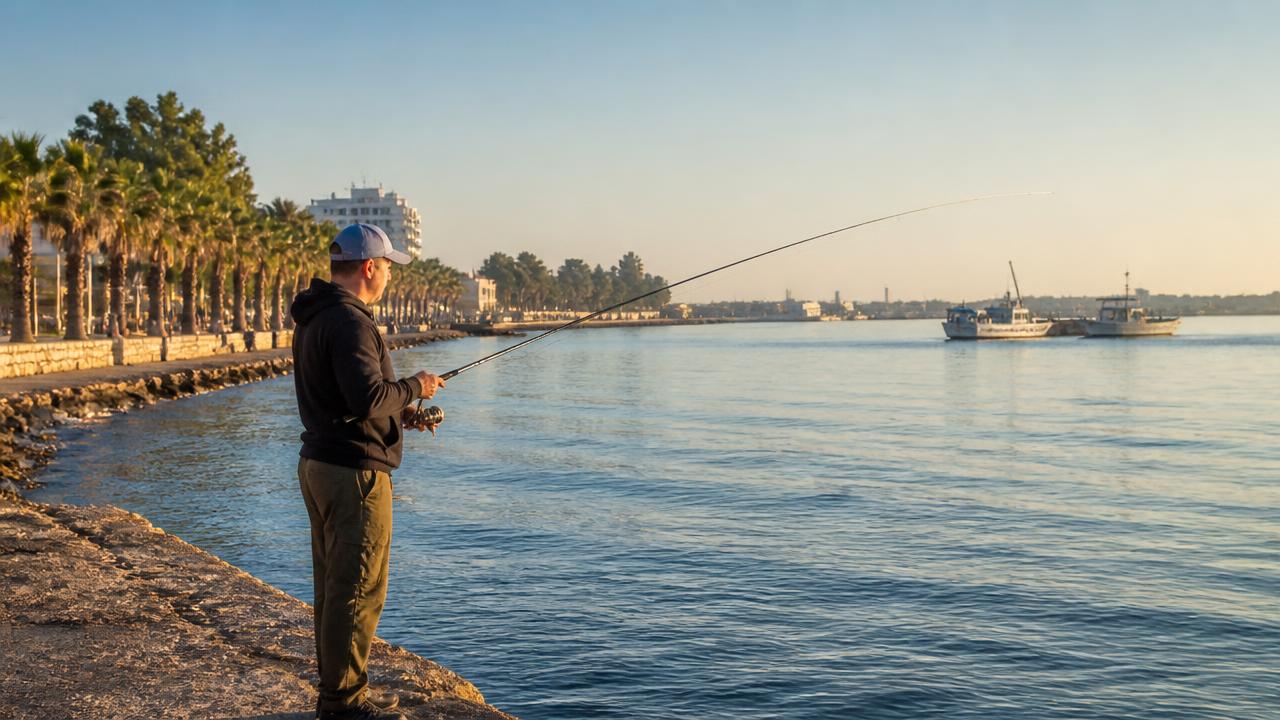
Larnaca is one of the most convenient and varied places to go shore fishing in Cyprus. Within a short stretch of coastline you have a working marina, stone breakwaters, a sandy promenade beach, and long runs of open coast heading both towards the airport and out towards Cape Kiti. That variety means Larnaca rewards more than one style of fishing: light rock fishing (LRF) around structure, some shore jigging off the deeper breakwater sections, and surfcasting or bait fishing along the open sand. This guide walks through the general character of the area, the techniques that suit it, the species you can realistically expect, and the safety and etiquette points every angler fishing here should know.
Overview of fishing in Larnaca
Larnaca sits on a wide, gently curving bay, which means the fishing character changes noticeably as you move along the coast. Close to the town centre you have the marina and its surrounding walls, plus the Finikoudes promenade with its sandy beach and shallow, sheltered water. Move further out towards the salt lake side or down towards Kiti and Zygi, and the ground opens into longer stretches of sand and mixed rock, with more exposure to wind and swell.
This mix is what makes Larnaca useful for anglers of all levels. Beginners and LRF fishers can find sheltered, easy-access marks close to town, while more experienced anglers chasing bigger predators or wanting a longer cast can head to the more open ground further from the centre. As with anywhere in Cyprus, always check current access rules and any seasonal restrictions with the Department of Fisheries and Marine Research (DFMR) before you go, since local arrangements can change.
Fishing environment: rock, sand and depth character
The marina area and its breakwaters offer typical harbour structure: vertical stone or concrete walls, some rubble at the base, boat traffic, and generally moderate depth close in that increases as you move along the outer wall. This kind of structure holds small predatory fish and bait species tight to the wall, particularly around any shaded or textured sections.
The promenade beach and areas close to it are shallow and sandy, sloping gently, which makes them better suited to bait fishing and light lure work in calmer conditions rather than long-range casting for big fish. Further along the bay towards the open coast, you find longer runs of sand interspersed with rockier sections and reef patches a bit further out, giving more depth and current for those wanting to spin, jig or surfcast for a wider range of species.
Techniques that suit Larnaca
Because Larnaca offers several ground types in one area, it is a good place to practise more than one technique without travelling far.
LRF around the marina and harbour walls
Light rock fishing is a natural fit for the marina and breakwater structure. Small jigheads paired with soft plastics, worked slowly along the wall face and around any visible structure, will draw interest from small wrasse, blennies, gobies and juvenile seabream, with the occasional small seabass or garfish in the mix depending on the season.
Shore jigging on deeper breakwater sections
Where the outer breakwater drops into deeper water, a light shore jigging approach with small to medium metal jigs can work, particularly early morning or evening when predatory fish move in to feed. This is very condition- and season-dependent, and results vary considerably.
Surfcasting and bait fishing on open sand
The more open beach sections away from the town centre suit a traditional surfcasting approach: a longer rod, a fixed or running leger rig, and baits such as worm or small fish strips cast beyond the breaking waves to find feeding fish over sand and mixed ground.
Target species
What you catch in Larnaca depends heavily on ground type, season and time of day, but the following are realistic targets across the different marks.
- Various wrasse species and small gobies/blennies on LRF gear around structure
- Seabream species over sandy and mixed ground, particularly on bait or small lures
- Small to mid-size seabass around the marina and harbour mouth, especially in cooler months
- Garfish near the surface in season, often visible working bait shoals
- Occasional small amberjack or leerfish around deeper breakwater sections — an opportunistic catch, not a guaranteed one
- Mullet cruising shallow sandy margins, notoriously difficult to hook but present in numbers
Tackle and lure guidance
For LRF work around the marina, a rod rated for very light casting weights (roughly 0.5–7g) paired with a small spinning reel and thin braid in the 0.3–0.6 PE range keeps presentation delicate enough for wary structure-dwelling species. Fluorocarbon leader helps against abrasion on rough stone.
For shore jigging on the deeper breakwater ground, step up to a rod capable of casting small to medium jigs (roughly 15–40g depending on depth and current), a reel with a reliable drag, and a stronger fluorocarbon leader to cope with fish running along the wall.
For surfcasting on the open beach sections, a longer rod suited to casting weights of around 60–120g, matched with a fixed-spool reel loaded with mono or a mono-braid combination, allows the distance needed to reach fish beyond the immediate surf zone. Rig choice — running leger, pulley rig or simple paternoster — should reflect the ground and target species on the day.
Best conditions and time of day
Calmer conditions with light onshore wind generally suit the harbour and marina areas, since a heavy swell makes fishing close to the walls uncomfortable and occasionally dangerous. On the open beach sections, a moderate onshore wind can actually help by stirring up the sand and encouraging fish to feed closer in, though large swell makes accurate casting and bite detection difficult.
Dawn and dusk tend to produce the most consistent activity across all the marks, with night sessions under harbour lighting also worth trying for species that come in to feed on baitfish attracted to the light.
Seasonality
Spring and autumn are generally the most productive periods, as water temperatures are moderate and a wider range of species is actively feeding inshore. Summer brings warmer, clearer water and can still fish well, particularly early and late in the day, while winter tends to concentrate fish around structure and deeper ground, favouring the harbour and breakwater marks over the open sand.
Access
The marina, promenade and much of the central Larnaca seafront are easily reached on foot with good public access, making this an approachable area for anglers without a car. Marks further along the coast towards Kiti or the airport side require a short drive and a bit more local knowledge of parking and safe entry points. Always respect any signage restricting access near the marina, port operations or protected sections of coast, and never assume a spot that was accessible last year still is — check locally before you commit to a plan.
Safety
The breakwater and rockier sections of Larnaca can be slippery, especially where sea spray or algae build up, so wear grippy, closed footwear rather than sandals. Keep an eye on sea state before venturing onto any exposed wall — swell that looks manageable can build quickly, and a rogue wave on wet stone is a genuine hazard. Avoid fishing exposed marks alone if you can help it, tell someone your plan, and always identify an escape route before you start fishing rather than after conditions change.
Etiquette and conservation
Larnaca’s marina and promenade are busy public spaces shared with walkers, divers, boat users and other anglers, so keep gear tidy, be mindful of hooks and lines near passers-by, and pack out everything you bring, including old line and bait packaging. Handle any fish you intend to release with wet hands and return it promptly, and take only what you will use. As with anywhere on the island, current size limits, closed seasons and any local restrictions should be checked directly with the Department of Fisheries and Marine Research (DFMR), since these can change and are not something to rely on secondhand information for.
Frequently asked questions
- Is Larnaca a good place to start shore fishing in Cyprus?
- Yes. The marina and promenade areas are easy to access, generally sheltered, and offer a realistic chance of small species on light tackle, which makes them a good introduction before tackling more exposed or technical marks elsewhere on the island.
- What is the best technique for fishing in Larnaca?
- It depends on where you fish. LRF suits the marina and breakwater structure, light shore jigging suits deeper breakwater ground, and surfcasting or bait fishing suits the open sandy beach sections away from the town centre.
- Can you catch amberjack or bigger predators from shore in Larnaca?
- Occasionally, around deeper breakwater sections, but this is an opportunistic and seasonal encounter rather than something to expect regularly. Manage expectations and treat any bigger fish as a bonus.
- Do I need a licence to fish in Larnaca?
- Requirements can change, so always check current rules directly with the Department of Fisheries and Marine Research (DFMR) before you fish, rather than relying on general guidance.
- What is the best time of year to fish in Larnaca?
- Spring and autumn tend to be most productive across the widest range of species, though the sheltered harbour and breakwater marks can still fish reasonably in winter, and early or late in the day during summer.
Recommended gear for this guide
Live picks from the Hobby Mania Cyprus catalogue that suit the setups described above.
Share this guide