Draft — pending fishing-accuracy review. Not listed on the site and not indexed by search engines.
Fishing Spots
Fishing at Coral Bay, Paphos: A Shore Angler’s Guide
Fishing.com.cy Editorial · 5 min read · Published · Updated
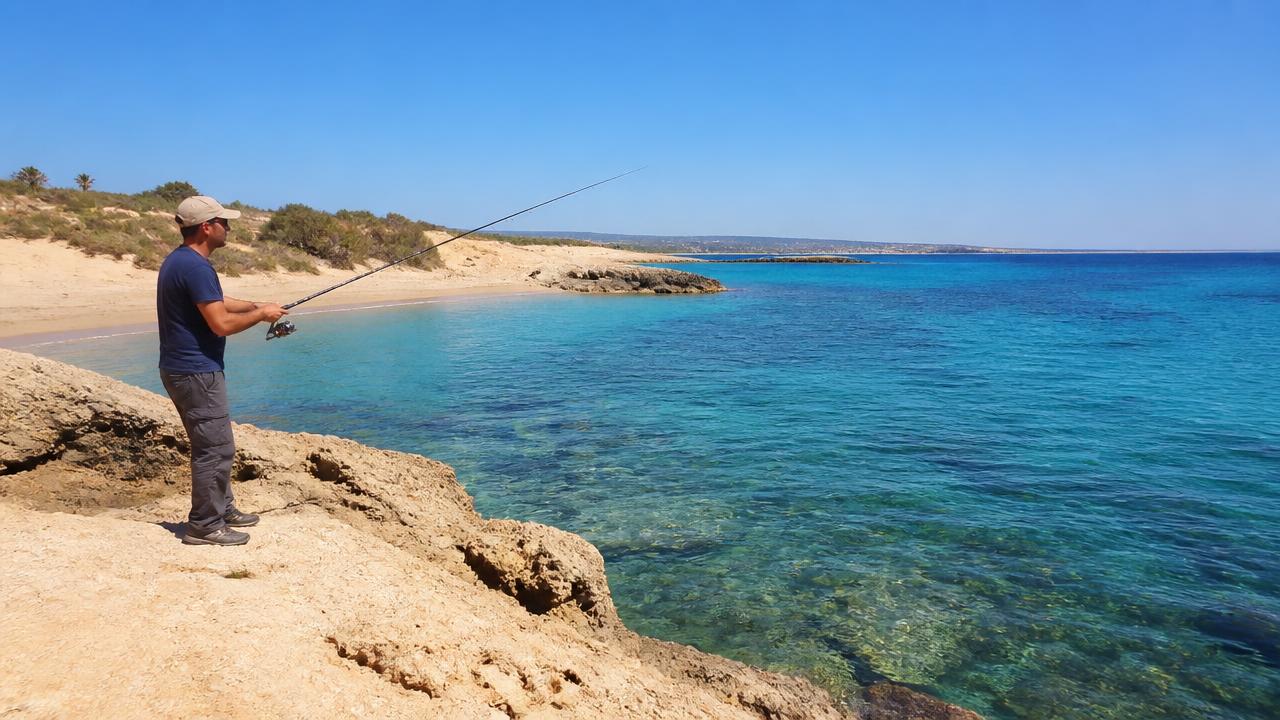
Coral Bay, just north of Paphos, is best known as a tourist beach, but the rocky headlands that bracket its sandy cove give it a genuine dual character for shore anglers. The beach itself is shallow, sandy and heavily used in season, while the rocky points at either end drop into deeper, clearer water and hold the kind of structure that light rock fishing and light spinning anglers look for. This guide covers how to read that environment, which techniques suit it, what you might catch, and the safety and conservation points worth keeping in mind.
Overview of fishing at Coral Bay
Coral Bay is a popular family beach for much of the year, which shapes when and how it is sensible to fish there. During the day in peak season, the sandy cove itself is busy with swimmers and sunbathers, so most serious fishing effort is better directed at the rocky headlands either side, or reserved for early morning and evening on the beach when it is quieter.
The headlands offer limestone rock formations typical of the Paphos coastline, with ledges, gullies and patches of clearer, deeper water close in. This is genuinely different ground from the open sand in the middle of the bay, and it is the headlands that give Coral Bay its reputation among light lure anglers.
Fishing environment: rock, sand and depth character
The central beach is shallow and sandy, shelving gently, and is more suited to short-range light fishing or bait fishing outside of the busy daytime hours. It does not offer the depth or structure that predatory fish favour, so results here tend to be modest and best treated as a relaxed, low-pressure option rather than the main event.
The rocky points on either side of the bay are the more interesting proposition. Limestone ledges give reasonable elevation above the water in places, with gullies and boulder-strewn ground below holding bait fish and, in turn, the small predators that feed on them. Depth increases fairly quickly off the ends of the headlands compared with the beach, which is what allows light spinning and LRF techniques to reach fish-holding water without a long cast.
Techniques that suit Coral Bay
The headlands are the standout feature here, and most technique choices should be built around them.
LRF on the rocky headlands
Light rock fishing works well along the ledges and gullies, with small jigheads and soft plastics or micro hard lures worked around visible structure, weed lines and any drop-offs close to the rock. Slow, methodical searching of different depths and angles tends to out-fish blind casting.
Light spinning for small predators
A light spinning approach with small metal lures, soft plastic paddle tails or small poppers can draw strikes from garfish, small leerfish and seabass patrolling the clearer water off the points, particularly in low light.
Light bait fishing on the sandy beach
Outside of busy daytime hours, simple light bait fishing on the sandy section can pick up small seabream and other sand-dwelling species, though this is a secondary option compared with the headlands.
Target species
Coral Bay’s clearer, rockier water off the headlands supports a slightly different mix from muddier harbour environments.
- Wrasse species around the rock ledges and gullies
- Small seabream over the sandier patches near the headlands and on the open beach
- Garfish near the surface, especially in warmer months
- Small leerfish and occasional seabass off the points in the right conditions
- Damselfish and other small resident species typical of clear Mediterranean rock
Tackle and lure guidance
For LRF on the headlands, a rod rated for very light lures (roughly 0.5–7g) with thin PE braid around 0.3–0.6 and a fluorocarbon leader suited to clear water gives the delicate presentation needed over visible, sometimes wary fish.
For light spinning, stepping up slightly to a rod handling 3–15g lures allows small metal lures or soft plastics on slightly heavier jigheads to be cast further off the points, useful when fish are holding a little further out over deeper water.
Because the water off the headlands is often clear, lighter, less visible fluorocarbon leaders and more natural lure colours tend to draw more interest than they might in murkier harbour settings.
Best conditions and time of day
Calm to lightly rippled water suits the headlands best, since clear conditions with too little movement can make fish more cautious, while excessive swell makes the ledges both harder to fish and less safe. Early morning and evening are typically better than the middle of a summer day, both for fish activity and for avoiding the crowds on the beach itself.
Seasonality
Late spring through autumn tends to bring the clearest, warmest water and the widest range of species onto the rocks, coinciding with the busiest tourist season on the beach — another reason to favour the early morning or evening for a session. Winter fishing is quieter in terms of both people and fish activity, but can still produce results on milder, calmer days.
Access
The beach and general area around Coral Bay are easily reached by road with normal public access, and the headlands can usually be walked to from the beach or nearby paths. Ground underfoot on the rocks is uneven and can be sharp in places, so sturdy footwear is worth the effort even for a short session.
Safety
Limestone ledges around the headlands can be slippery when wet, and swell that looks modest from a distance can surge unexpectedly onto lower ledges, so always assess sea state before committing to a spot and keep a clear escape route in mind. Avoid fishing the more exposed sections alone, wear grippy footwear, and never turn your back on the sea for long periods, particularly on any ledge close to the waterline.
Etiquette and conservation
Coral Bay is a well-used tourist beach, so be considerate of swimmers, snorkellers and other beach users, particularly around casting distance and hook safety, and avoid fishing directly among bathers during busy hours. Handle any fish intended for release carefully and return it promptly, and take only what you genuinely need. Species limits, closed seasons and any other rules should be confirmed directly with the Department of Fisheries and Marine Research (DFMR), since requirements can change and this article is not a substitute for checking current guidance.
Frequently asked questions
- Is Coral Bay a good spot for LRF fishing?
- Yes, the rocky headlands at either end of the beach offer typical LRF structure — ledges, gullies and clear water — that suits small jigheads and soft plastics worked slowly and methodically.
- Can you fish the main Coral Bay beach itself?
- You can, particularly outside busy daytime hours, but the shallow sandy ground offers less structure than the headlands, so results tend to be more modest and it is best treated as a relaxed secondary option.
- What is the best time of day to fish Coral Bay?
- Early morning and evening are generally best, both because fish activity tends to pick up in lower light and because the beach and headlands are much quieter outside of peak tourist hours.
- Is it safe to fish the rocks at Coral Bay?
- It can be, with sensible precautions: wear grippy footwear, check sea state before stepping onto any ledge, avoid fishing alone on exposed sections, and always know your escape route in case swell picks up.
- What fish can you catch at Coral Bay?
- Wrasse, small seabream, garfish and occasional small leerfish or seabass are realistic targets off the headlands, with sandier species possible on the open beach itself.
Recommended gear for this guide
Live picks from the Hobby Mania Cyprus catalogue that suit the setups described above.
Share this guide