Draft — pending fishing-accuracy review. Not listed on the site and not indexed by search engines.
Gear & Tackle
Best LRF Lures for Cyprus
Fishing.com.cy Editorial · 5 min read · Published · Updated
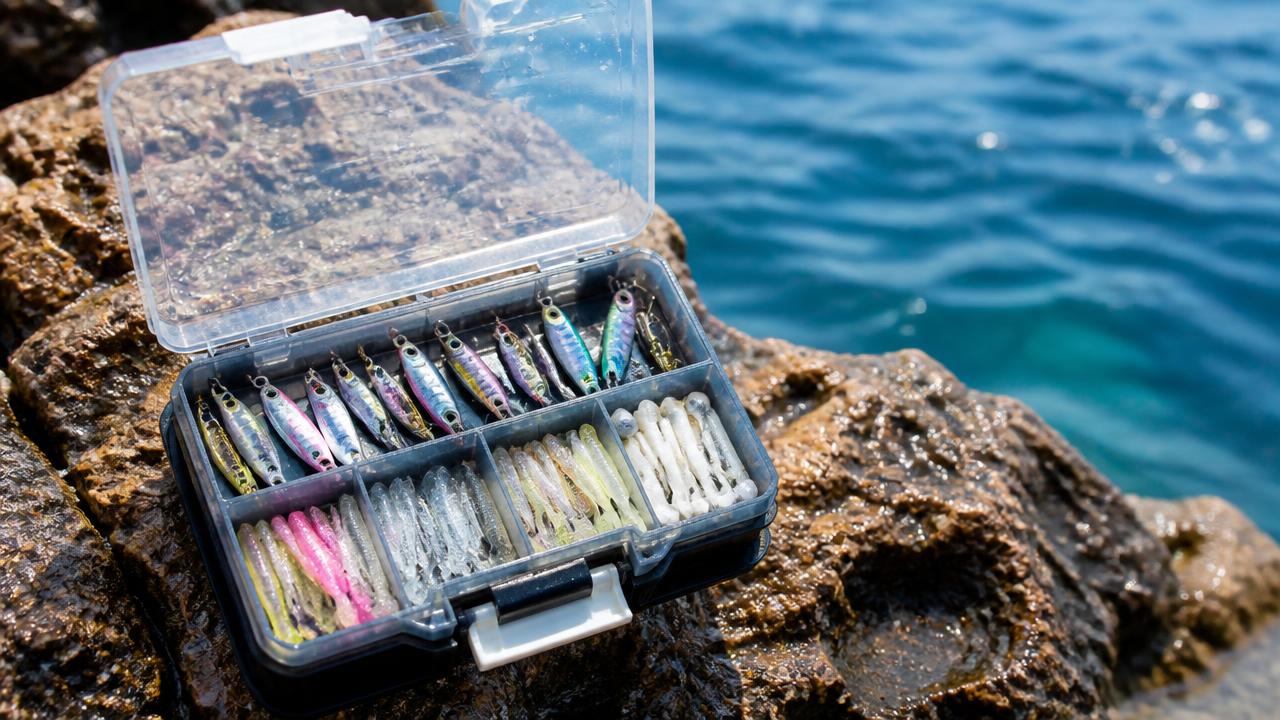
Cyprus LRF marks reward anglers who carry a compact, purposeful lure box rather than a huge one. The water off most harbour walls and rock marks is gin-clear for much of the year, so presentation and size usually matter more than sheer variety. This guide runs through the three main lure families worth carrying for light rock fishing here — micro jigs, soft plastics and small hard lures — with realistic weights, colours and the conditions where each one comes into its own. For the wider technique picture, see our complete guide to LRF fishing in Cyprus.
What ‘LRF lure’ actually covers
Light rock fishing lures are simply small — typically 3 to 7 cm — and matched to correspondingly light jigheads, hooks and line. In Cyprus the target list (small wrasse, damselfish, gobies, blennies, ornate wrasse, painted comber, occasional small seabream and seabass) mostly feeds on tiny fry, shrimp and worms, so lure size should mirror that rather than trying to imitate anything large.
Three families cover almost every situation: micro jigs (small metal or lead-bodied lures fished with a jigging action), soft plastics on jigheads, and small hard lures such as micro crankbaits or vibration baits. Carrying a modest selection of each, rather than one huge box of a single type, is the most useful approach.
Micro jigs
Micro jigs are compact metal or lead-and-metal lures, usually 1 to 5 g, fished with a lift-and-drop or steady jigging retrieve. They cast well into wind, sink quickly through the water column, and give a flash and vibration that draws fish from a distance — useful over deeper harbour water or when covering ground quickly along a breakwater.
In Cyprus they earn their place on marina walls with deeper water close in, and on rock marks where the bottom drops away sharply. Silver and gold finishes cover most light conditions; a small dash of pink or chartreuse can help in murkier or more coloured water after wind or rain.
- 1–2 g micro jigs: shallow harbour margins, calm conditions, very light gear
- 3–5 g micro jigs: deeper marina walls, breakwaters, or when a breeze needs beating
- Silver/gold: clear water, bright days
- Pink/chartreuse accents: coloured water, dull light, early morning
Soft plastics on jigheads
Soft plastics are the most versatile lure type for Cyprus LRF and cover everything from tiny isome-style worms to small paddletails and creature baits. Rigged on a jighead of 0.6 to 3 g, they can be worked painfully slowly along the bottom for wrasse and gobies, or twitched just under the surface for small seabass and garfish.
Natural colours — brown, green, motor oil, clear with glitter — tend to be the reliable choice over rock and weed, since they resemble the shrimp, small crabs and blennies that make up most of the natural diet. Brighter pinks and whites have their moments in low light or coloured water, but are best treated as a change lure rather than a first choice.
- Isome-style worms: slow, twitching retrieve for wrasse over rock and weed
- Small paddletails: steady retrieve for seabass and pelagic-feeding fish
- Creature baits: dropped and left still on the bottom for a natural, exploratory bite
Small hard lures
Micro hard lures — tiny crankbaits, small vibration baits and micro poppers — are less essential than soft plastics but worth a couple in the box, especially for evening and night sessions around harbour lights where small fish and seabass hunt fry near the surface.
A small floating minnow worked with a gentle twitch-pause retrieve suits calm evenings; a sinking vibration bait covers deeper water on a steady retrieve. These lures shine when fish are actively feeding on bait balls or fry, which is easiest to spot around lit harbour walls after dark.
Weights and matching to conditions
Lure and jighead weight should be chosen to suit depth, wind and how you want the lure to behave, not fixed to a single number. In calm, shallow water, 0.6–1 g jigheads or 1–2 g micro jigs let a lure fall naturally and stay in the strike zone longer. In wind or over deeper water, stepping up to 2–5 g keeps contact with the lure and lets you feel takes.
It is worth carrying a small spread of weights rather than one, since Cyprus conditions can change through a session as wind picks up or you move to a deeper section of wall.
Colour selection in practice
As a simple rule: natural and translucent colours for clear water and bright sun, and brighter or darker high-contrast colours for low light, dawn, dusk and coloured water. Cyprus water is clear for much of the year, so natural colours will do most of the work — but a couple of bright options are worth having for the days when they are needed.
Building a compact starter selection
Rather than buying everything available, a focused starter selection covers the vast majority of Cyprus LRF situations and can be expanded once you know which marks and species you fish most.
- A handful of 2–4 cm isome-style worms in two or three natural colours
- A few small paddletails in natural and one brighter colour
- Jigheads from 0.6 to 3 g in a range of hook sizes
- Two or three micro jigs from 2 to 5 g in silver and gold
- One small floating hard lure for evening sessions
Frequently asked questions
- What is the best all-round LRF lure for Cyprus?
- A small natural-coloured soft plastic worm on a light jighead is the most versatile choice, since it can be fished slowly over rock and weed for wrasse or twitched faster for seabass. It is a sensible starting point before branching into micro jigs and hard lures.
- Do I need bright colours for LRF in Cyprus?
- Not usually as a first choice. Cyprus water is clear for much of the year, so natural, translucent colours tend to outfish bright ones. Keep a couple of brighter lures for low light, dawn, dusk or after wind has coloured the water.
- What jighead weight should I start with?
- Something between 1 and 2 g covers most shallow harbour and rock-mark situations in calm conditions. Carry heavier options up to 3–5 g for windy days or deeper marina walls where you need to keep contact with the lure.
- Are micro jigs worth carrying if I already have soft plastics?
- Yes. Micro jigs sink faster and cast further, so they are useful for covering deeper water or fishing into wind quickly, situations where a light jighead and soft plastic can struggle to get down or hold bottom.
Recommended gear for this guide
Live picks from the Hobby Mania Cyprus catalogue that suit the setups described above.
Share this guide