Draft — pending fishing-accuracy review. Not listed on the site and not indexed by search engines.
Gear & Tackle
LRF Soft Plastics Guide for Cyprus
Fishing.com.cy Editorial · 4 min read · Published · Updated
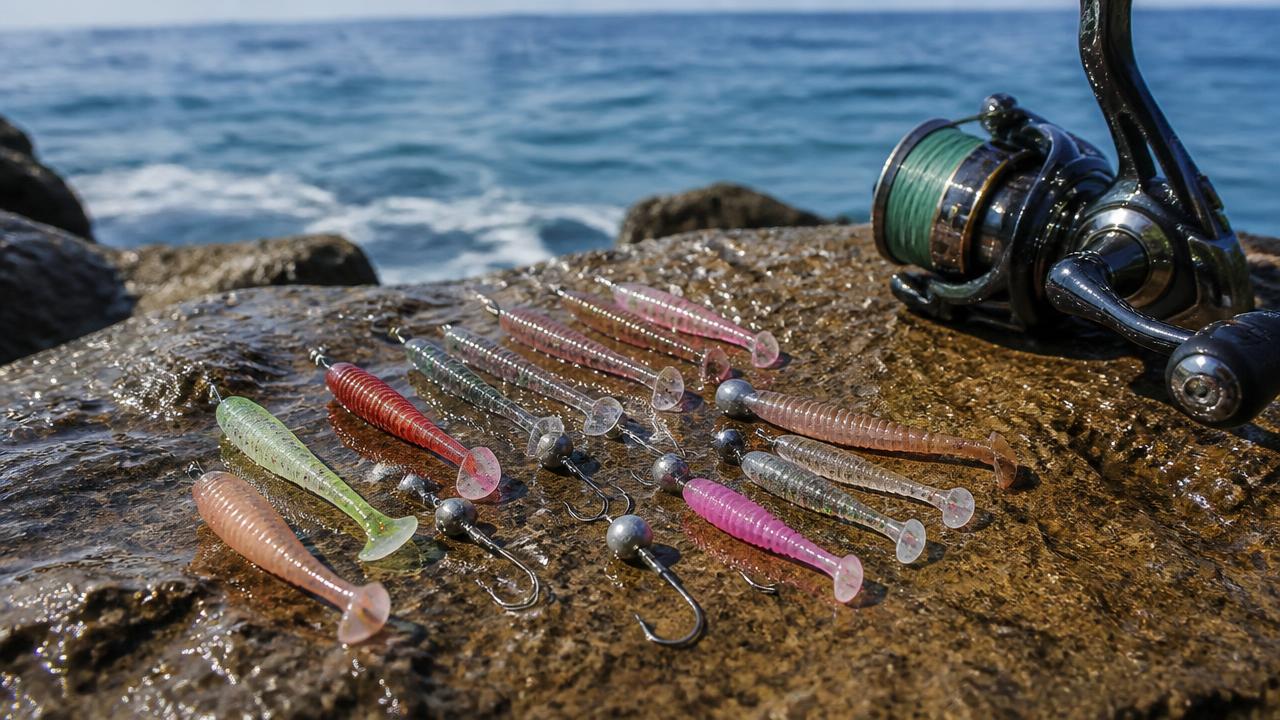
Soft plastics are the backbone of most Cyprus LRF boxes, versatile enough to cover slow bottom fishing for wrasse and faster mid-water retrieves for seabass in the same session. This guide looks at the main soft plastic styles worth carrying — isome-style worms, paddletails and creature baits — along with how to rig them, choose jighead weights and hook sizes, and work them effectively. It follows on from our complete guide to LRF fishing in Cyprus.
Why soft plastics dominate LRF
Soft plastics combine a natural, lifelike action with the ability to be fished at almost any speed or depth, simply by changing jighead weight and retrieve style. That flexibility is exactly what Cyprus LRF marks demand, since the same wall can hold slow, bottom-hugging wrasse and fast, mid-water seabass within a few metres of each other.
Their soft, forgiving texture also means fish tend to hold on a fraction longer than with hard lures, giving a slightly better hook-up window on the light hooks and fine leaders typical of LRF tackle.
Isome-style worms
Isome-style worms are thin, segmented soft plastics that imitate marine worms and are one of the most consistently productive LRF lures in Cyprus, particularly for wrasse, gobies and blennies feeding over rock, weed and rubble. Their thin profile and subtle action suit a slow, twitching retrieve rather than anything fast.
They are usually rigged on a small jighead of 0.6 to 1.5 g, with the worm threaded straight to keep a natural, undulating action. Scented versions can help in low-visibility water or when fish are feeding cautiously, since these species often locate food partly by scent as well as sight.
- Jighead weight: 0.6–1.5 g for shallow, calm water
- Hook size: small, typically size 8–12 depending on worm thickness
- Retrieve: slow lift-and-drop, or a gentle twitch along the bottom
Paddletails
Small paddletail soft plastics, usually 3 to 6 cm, have a built-in swimming action from their tail even on a steady, straight retrieve, making them a strong choice for covering water and targeting more actively feeding fish such as small seabass or fish holding higher in the water column.
They are typically rigged on jigheads of 1 to 3 g, with weight chosen according to depth and current — heavier in deeper marina water or where there is some flow, lighter in shallow, calm harbour margins where a slow fall is wanted.
- Jighead weight: 1–3 g depending on depth and current
- Hook size: size 6–10, matched to the paddletail’s body thickness
- Retrieve: steady straight retrieve, or slow-roll with occasional pauses
Creature baits
Small creature baits — imitating shrimp, small crabs or other invertebrates with legs, claws or appendages — add a different silhouette and action to the box, useful when fish seem to be ignoring worms and paddletails, or in areas known to hold plenty of natural crab and shrimp life.
These are often fished very slowly, sometimes left almost motionless on the bottom with only occasional small twitches, imitating a foraging crab or shrimp rather than anything swimming with purpose. Jighead weight is usually kept light, 0.8 to 2 g, to allow this slow, natural presentation.
- Jighead weight: 0.8–2 g for a slow, natural fall
- Hook size: size 8–12, depending on the bait’s body size
- Retrieve: very slow, mostly stationary with small twitches
Rigging basics
For all three styles, threading the soft plastic straight and centred on the jighead shank keeps the action true and avoids the lure spinning on the retrieve, which both looks unnatural and can twist light leader material. Trimming a soft plastic slightly shorter than its full length can also help match it to a smaller jighead or hook without losing the tail action that gives it life in the water.
Matching hook gape to the thickness of the soft plastic body is worth checking before a session — too small a hook relative to a thick-bodied lure reduces hook-up rates, while too large a hook can affect the lure’s natural fall and action.
Matching weight and retrieve to conditions
As a general approach: use the lightest jighead that still lets you feel the lure and keep contact with the bottom or the depth you are targeting. Wind, current and depth all push you towards heavier jigheads; calm, shallow, close-range fishing allows lighter ones and slower, more natural presentations.
Varying retrieve speed and pause length through a session, rather than settling on one approach, is often the fastest way to work out what a particular mark wants on a given day.
Frequently asked questions
- What is the best all-round LRF soft plastic for Cyprus?
- A small isome-style worm on a 0.6–1.5 g jighead is one of the most consistently productive options across Cyprus rock marks and harbour walls, particularly for wrasse and other bottom-feeding species over rock and weed.
- What jighead weight should I use with LRF soft plastics?
- Start light — around 0.6 to 1.5 g for shallow, calm water — and step up to 2–3 g in deeper water, current or wind. The right weight is the lightest one that still lets you feel the lure and maintain contact with the target depth.
- When should I use a paddletail instead of a worm?
- Paddletails suit more actively feeding fish and faster retrieves, useful for covering water or targeting species such as small seabass higher in the water column. Worms are better for slow, deliberate presentations to bottom-feeding species like wrasse.
- Do creature baits work well in Cyprus?
- Yes, particularly in areas with plenty of natural crab and shrimp life. They are usually fished very slowly, almost motionless, and can produce when fish are ignoring worms or paddletails fished with more movement.
Recommended gear for this guide
Live picks from the Hobby Mania Cyprus catalogue that suit the setups described above.
Share this guide