Draft — pending fishing-accuracy review. Not listed on the site and not indexed by search engines.
Techniques
LRF vs HRF: which style suits you in Cyprus?
Fishing.com.cy Editorial · 4 min read · Published · Updated
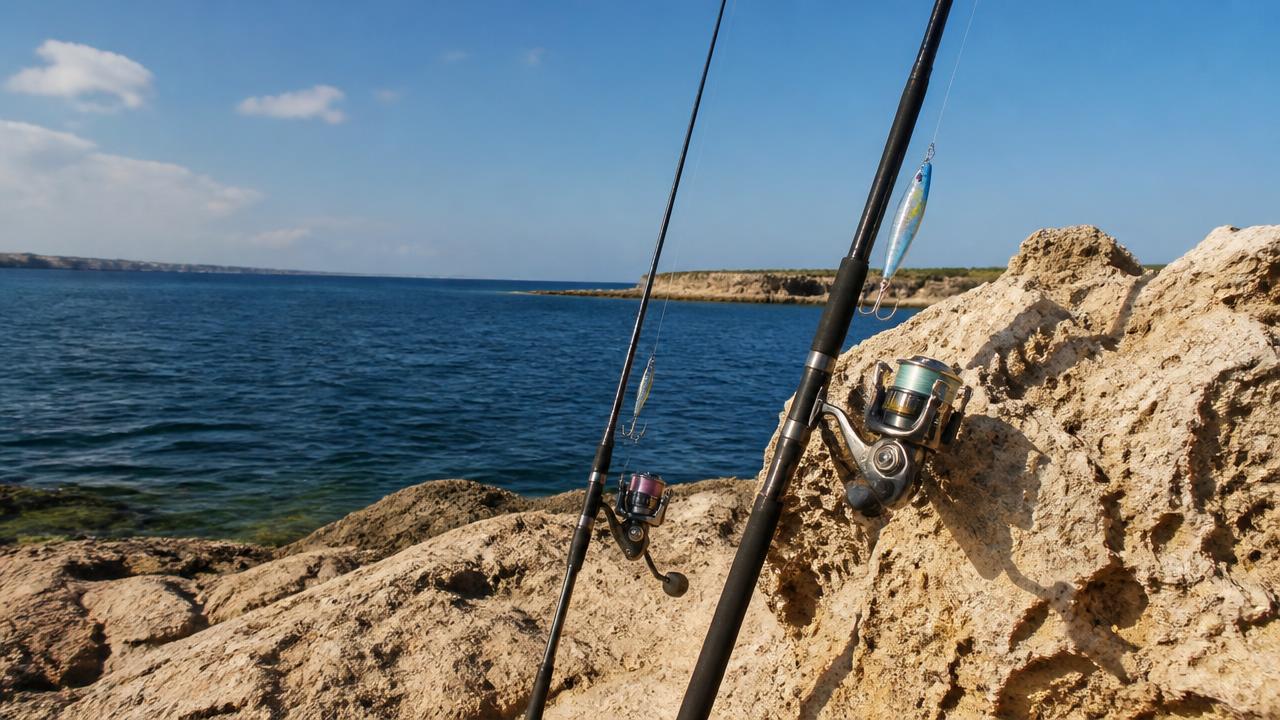
LRF and HRF both put you on the rocks with a spinning rod in hand, but beyond that starting point they diverge quickly. LRF is about finesse, small species and safe, accessible ground; HRF is about strength, bigger predators and rougher, more demanding terrain. Neither is objectively better — they suit different goals, different ground and, often, different stages of an angler's development. Here's how to tell which one fits what you're actually after.
The core difference
LRF (light rock fishing) uses ultralight rods, tiny jigheads and soft plastics under a couple of grams, and light lines down to 2–4 lb, to target small species such as gobies, blennies and small wrasse from harbour walls, marinas and easy rock ledges. It rewards patience and precise presentation more than raw casting distance or power.
HRF (heavy rock fishing) scales everything up — lures in the 15–40 g range, rods rated 15–50 g, and leaders of 40–60 lb — to target grouper, large wrasse, dentex and occasionally amberjack over broken, often steep and deep-close-in rocky ground. It rewards structure reading and strength in the first seconds of a fight far more than delicate presentation.
Tackle compared
The tackle gap between the two styles is significant. An LRF setup might run 2–4 lb line and lures under 3 g on a rod barely thicker than a pencil; an HRF setup runs PE1.5–PE3 braid, 40–60 lb fluorocarbon leader and lures many times heavier on a noticeably stouter rod.
This isn't just a difference of degree — it changes what fish you can safely land. LRF tackle is deliberately mismatched to anything large, because playing a bigger fish out on ultralight gear over structure usually ends in a lost fish or a lost rig. HRF tackle is built specifically to shortcut that fight and win control immediately.
- LRF: 2–4 lb line, sub-3 g lures, ultralight rod, small species
- HRF: PE1.5–PE3 braid, 40–60 lb leader, 15–40 g lures, larger predatory species
Ground and access compared
LRF's great strength is how accessible its ground is. Harbour walls, marina pontoons and easy, flat rock ledges all hold LRF species, meaning you can fish it safely almost anywhere with a bit of structure and clean water, including places suitable for beginners and families.
HRF ground is a different proposition. Steep, broken limestone with deep water close in is what produces, and that same ground is often slippery, exposed to swell and genuinely hazardous in the wrong conditions. HRF simply cannot be fished as casually or as safely as LRF, and that trade-off is worth being honest with yourself about before committing to a session.
Which style suits which angler
LRF is the better starting point for beginners, for fishing with children, and for anyone who wants a relaxed, low-risk session with a realistic chance of steady action. It's also an excellent way to learn to read structure and presentation before stepping up to heavier styles.
HRF suits anglers who already have some rock fishing experience, are comfortable assessing sea conditions and rocky terrain, and specifically want a shot at bigger, harder-fighting species. It asks for more from both your tackle budget and your judgement of when a mark is safe to fish.
Plenty of anglers do both, switching between the two depending on conditions, time available and mood — a calm morning with a young family might mean LRF off a harbour wall, while a bigger swell-free day alone might mean a session probing HRF ground for grouper.
Species you'll actually catch
LRF sessions typically produce a steady stream of smaller species — gobies, blennies, small wrasse, occasional small seabream — with plenty of bites even on a quiet day. HRF sessions are lower-frequency but higher-stakes: fewer bites overall, but the fish that do take are considerably larger, and grouper, big wrasse and dentex are realistic targets that LRF tackle simply isn't built to handle.
Frequently asked questions
- Is LRF or HRF better for beginners in Cyprus?
- LRF is generally the better starting point. It uses safer, more accessible ground like harbour walls and marinas, and the tackle is more forgiving to learn on. HRF asks for more experience reading rocky ground and assessing sea conditions before it can be fished safely.
- Can the same rod be used for LRF and HRF?
- No, not effectively. LRF rods are built for sub-3 g lures and 2–4 lb line, while HRF rods need to handle 15–40 g lures and 40–60 lb leaders with enough backbone to control a large fish near structure. The two require genuinely different tackle.
- Which style catches bigger fish, LRF or HRF?
- HRF, by design. It targets grouper, large wrasse, dentex and occasionally amberjack, all species that LRF's ultralight tackle isn't built to handle. LRF instead offers frequent action with smaller species like gobies and small wrasse.
- Is HRF fishing more dangerous than LRF?
- Generally yes, because HRF ground tends to be steeper, deeper close in and more exposed to swell than the harbour walls and easy ledges typical of LRF. HRF sessions need proper footwear, condition checks and a genuine safety mindset.
- Should I learn LRF before trying HRF?
- It isn't essential, but many anglers find it a natural progression — LRF builds structure-reading and lure presentation skills on safer ground before stepping up to the stronger tackle and rougher terrain that HRF demands.
Recommended gear for this guide
Live picks from the Hobby Mania Cyprus catalogue that suit the setups described above.
Share this guide